


mti member

Kowalski Heat Treating

A company that does tough jobs no one else wants to and has a big personality? That’s Kowalski Heat Treating (KHT). They specialize in PIA (pain in the @%$) jobs. The company was started in 1975 by Robert S. Kowalski in a 3,000 sq. ft. facility to service the needs of tool and die industries in northern Ohio using salt bath technology. Since its inception, KHT has grown to encompass over 80,000 sq. ft. of processing capacity on nine campuses with 48 employees.

Today the company is led by next generation President Stephen Kowalski, who is supported by family members and specialists in sales, manufacturing, procurement, logistics, delivery, warehousing, lab technicians, and supply chain management. It is a family business that works to have fun dealing with customers’ never-ending stream of problem jobs. They can fixture/clamp over one million pieces of various sizes up to 60” per week.
Over the years, based on customer demand, KHT has consistently invested in service capacity in its specialty divisions which include K-Vac (high pressure quench vacuum processing), K-Salt (rack salt to salt — austempering and marquenching), K-Flat (high volume fixture flattening up to 60” in diameter), K-Life (deep cryogenic processing),
K-Glow (pulsed plasma ION nitriding), and K-Labs (specialty on-site laboratory for performance testing). Also included is K-Solve: prototype development of processes, equipment, and tooling for the heat treating industry with 3D development of tooling to optimize processing. Together these divisions are serving a vast array of industries like
automotive, military, agriculture, power transmission, oil and gas, transportation, construction equipment, heavy industrial, and outdoor power equipment.

These services ensure consistent processing of distortion sensitive, highly engineered components. The most important process for KHT is rack salt to salt which enables unique flexibility to solve marquenching and austempering problems.
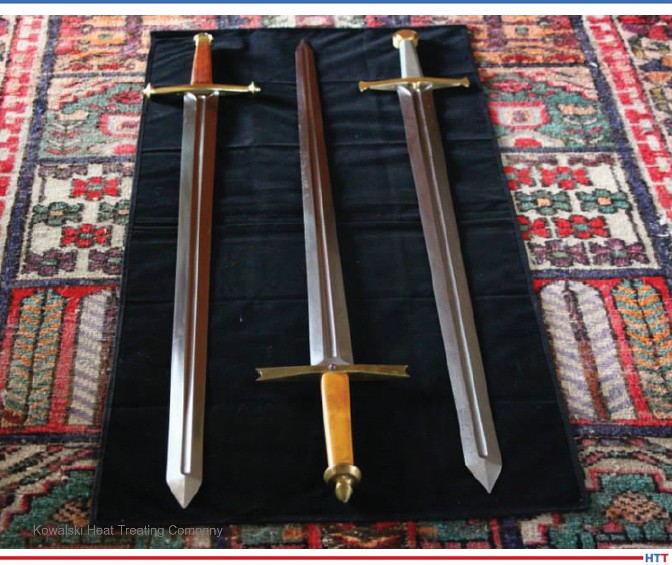
There are the usual parts a heat treat company can work on, and then there are. . . swords! They may seem like a thing of the past but are still being made. Hand-made, period-specific broad swords are the most interesting parts the company has worked on. The customer had put 2,000 hours into the blade, and asked KHT to manage the blade and edge hardening. Now that was downright scary!

As far as future planning goes, the company will continue investing in both technology and people to service their markets, while providing the training, tools, and opportunities for the next generation of KHT problem solvers to grow both professionally and personally.


Find heat treating products and services when you search on Heat Treat Buyers Guide.com


Kowalski Heat Treating Read More »
Erie Steel Ltd.

In 1961 in an old building that formerly housed the Chevrolet Toledo Transmission power plant, Phil Flynn, chief metallurgist of Buick Motor, and Bill Durako, the tool steel metallurgist of Crucible Steel, founded Erie Steel Ltd.

As with many entrepreneurs of the era, they started with small (used) atmosphere batch furnaces of limited capability. But what they lacked in equipment was more than made up for with engineering know-how and a heavy dose of “can-do attitude.” The improvement of heat treat practices and a desire for customer satisfaction drove the company. Today that can-do culture, along with expanding engineering capabilities, a professionally educated management team, 50 employees, and a modern 70,000 sq. ft facility continues to drive Erie Steel to excellence.

The company works to understand all aspects of a client’s product material type, procurement, and manufacturing methods, and then Erie optimizes the heat treat process to provide the requisite metallurgical, dimensional, and cosmetic properties.

The major industries served include aerospace, automotive, mining, agriculture, construction, and others. A few services provided to these industries include precision atmosphere carburizing; atmosphere neutral hardening; atmosphere normalizing/annealing; vacuum hardening, normalizing, and annealing. A somewhat unique capability is the mesh belt polymer quench, which affords the possibility of both case hardening and neutral hardening in combination with a polymer quench.

Heat treat processes are part-specific and incorporate the necessary considerations including material hardenability, prior condition, distortion control, and post heat-treat cosmetic requirements and finishing operations. One heat treat process specific to Erie Steel is distortion critical carburizing, in which part fixturing is developed specific to the part, and thermal cleaning may be employed. The process may include preheat cycles leading up to the carburizing temperature. The carburizing process may incorporate a boost/diffuse strategy to control surface carbon content, and that process may incorporate a reduction in temperature from the carburizing temperature for quenching. Quenching may involve regular or modified mar-quenching, and lastly, agitation is controlled to assure distortion is controlled and consistent.

Photo Credit: Erie Steel Ltd.

One project of distinct importance was the heat treatment of crankshafts for the natural gas compressor industry. These cranks are manufactured from a 4140 forging 38” OD X 82” OAL that is rough machined into a 3-pin crankshaft that has 36” OD counterweights, and 10 bearing journals. After rough machining, the cranks are indicated for run-out with the high point marked on the companion counterweight and sent for heat treating. This very specific process was duplicated for more than 200 crankshafts from three different forging sources, without a single noncompliance.

In the next five years, Erie Steel Ltd. plans to maintain their emphasis on a comprehensive approach to engineered heat treat processing, as well as continue to improve their customer service and automation. The next 10 years will bring new projects such as the transition from ICE to EV, which will involve different manufacturing processes and requirements. Gas quenching will assist in this effort as well as low temperature thermal treatments such as nitriding and nitrocarburizing. These are processes the company has historically performed well, and the future will be no exception to their commitment to excellence in both processes and services.

Erie Steel Ltd. Read More »

Complete Heat Treating

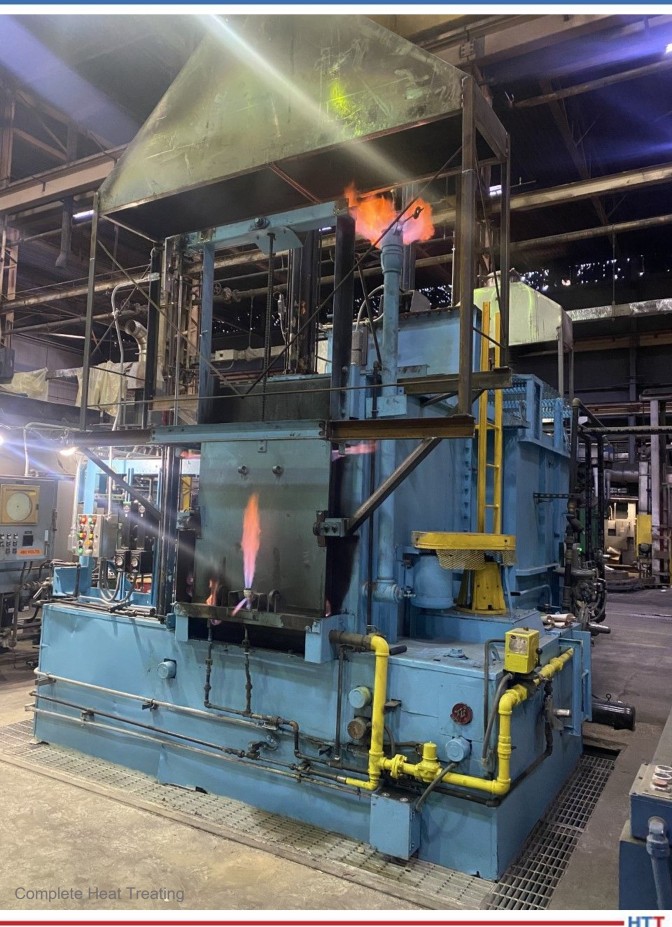
A company which has served construction, mining, and earth moving, but which is now involved in gas, power generation, military, aerospace, and more is Complete Heat Treating — this month’s MTI Member Profile company. They have many value-added operations under one roof combined with knowledgeable technical staff helping to select the optimum process to meet customer expectations.

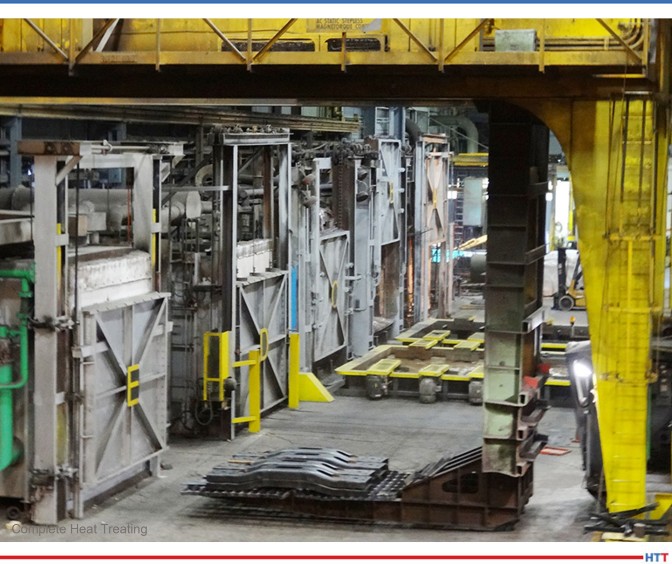
Complete Heat Treating was established in 2007 and has since acquired an additional two companies, increasing the company’s capabilities and markets. In 2011, they acquired Wisconsin Steel Industries, which was in operation since 1939. In 2018, they then acquired Commercial Heat Treat. After the acquisition in 2011, major rigging projects were undertaken to move furnaces, presses, and
other equipment to the present-day site in Milwaukee. One of the largest items moved was a large 53-foot car-bottom furnace.

A few of the company’s services include those in heat treating, blasting, coating,
straightening, and hardening. Heat treating capabilities encompass a wide variety of applications and part sizes. They offer stress relieving, annealing, quenching, tempering, and normalizing of parts up to 53’ long x 18’ wide x 15’ high and weighing up to 100,000 lbs. Open fire furnaces are available in multiple sizes and can reach up to 2200°F with heat outputs of 40,000,000 BTUs. In addition to having metallurgists on staff, other services offered are abrasive grit blasting, oil preserve coating, close tolerance straightening, and portable hardness testers.

Although all processes are important, control of the furnaces with properly calibrated pyrometry is critical to achieving quality specifications. The ability to successfully process the extreme size, shape, complexity, alloys, and quantity of parts is a unique feature of the company. They commonly heat treat large, heavy-section (10–20 ton) plates; 5,000+ tiny stampings weighing ounces; and finish machined precision parts with close tolerances. They can anneal, carburize, flame harden, straighten, blast—all to one part!

An interesting heat treat project is Complete’s involvement with large castings for the Space Launch System (SLS) for booster rockets. These were highly complex parts with a book of quality requirements.
They achieved the large heavy section mechanical property requirements and multiple hardness measurements to encompass the extremities of parts because of their procedural development that reviewed quenchant agitation direction and severity. Another interesting project involvement is the first
high-speed train in the U.S. It is a highly complex part consisting of castings, forgings, and plates with challenging quality requirements. The success of the lengthy procedural development made it memorable.

The company looks ahead to more memorable projects as new developments emerge, which include the commissioning of an integral-quench carburizing furnace and heat-treating aluminum components, and further expansion of flame hardening capability. Complete is best known for its diverse capabilities in both process and size of parts, but the quality of the 24-person workforce, their experience, technical competence, and honesty are the traits of which the company is proudest.

Complete Heat Treating Read More »

Thermal-Vac Technology

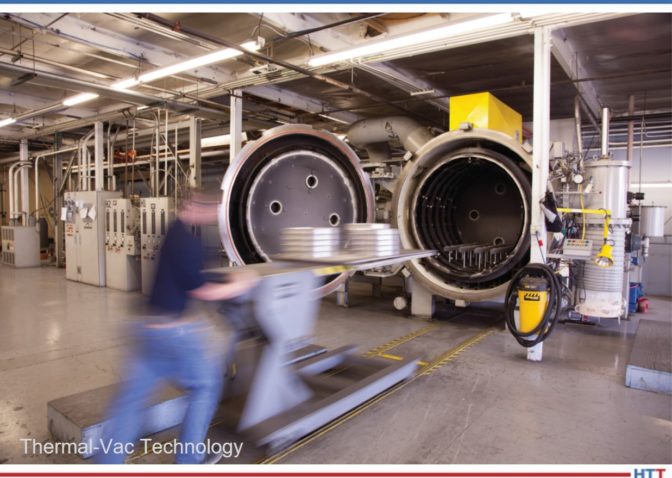
Thermal-Vac Technology, Inc, based in Orange County, CA, is a southern California brazing, heat-treating, and finishing facility offering services to a wide customer base. Founded in 1985 by Steve Driscol, the 60-employee company is family-owned with second generation family members leading the business since 2012.

With an original facility of 5,500 square feet and 11 active customers, the company transformed into a multiple-location company across two states with over 80,000 square feet of campus footprint. By the end of the 2020 fiscal year, they had over 600 active customers with total sales of just under $12 million.

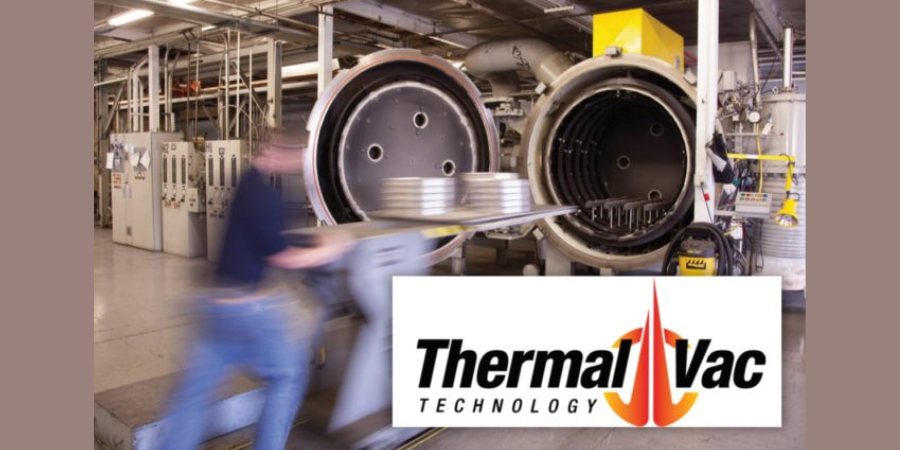
Vacuum furnace brazing is what the company was founded on, and additional services now include: aluminum dip brazing, induction and torch brazing and heat treating, atmosphere brazing and heat treating, copper and electrolytic nickel plating, specialized aluminide and silicide coatings, quench and temper, and much more.

Main industries served include aerospace, military, and medical. Thermal-Vac maintains strict quality regulations, with Nadcap and AS9100 accreditations. They specialize in highly technical, high-profile projects including missile defense, deep space exploration, medical devices, and others.

Customers have brought interesting projects over the years—everything from the space shuttle main engine to entirely new types of metal for the additive industry, to new types of coatings and oxidation resistance measures.

Partnering with NASA and aerospace leaders, the company works as a supplier on the critical SLS-Orion project to return Americans (including the first woman) to the moon and send astronauts to Mars in the early 2030s.

The company is proud of “The Thermal-Vac Advantage”: A commitment to being not only a one-stop provider of brazing, heat-treating, and finishing services, but also a fully committed and fully engaged partner.

With a focus on being straightforward, putting customers first by truly caring about them, and never giving up, they have maintained a team with less than 10 percent voluntary turnover for the past decade and was acknowledged as a 2018 Top Workplace by the Orange County Register.

Some of the company’s 2020/2021 accomplishments include being named as an Orange County Business Journal Companies That Care Nominee and an Inc. 5000 Fastest Growing Business, among others. Three Thermal-Vac employees have also been recognized in Heat Treat Today’s 40 Under 40. The company has given over $25,000 to scholarship funds and non-profits, like Chrysalis.

The company plans to grow continually through a commitment to excellence and service and include new offerings via capacity increases in all major service lines. Focus on their passion helps to keep the right priorities in mind for customers: “We build good parts here; at a profit if we can, a loss if we must, but always good parts.” In the next five to 10 years, Thermal-Vac will be ushering in a new generation of heat treaters and will remain committed to bettering the industry through education, training, and providing expertise.

Thermal-Vac Technology Read More »

Skip to content