Another Heat Treat Boot Camp has come and gone. Yesterday marked the end of a successful second year in Pittsburgh, Pennsylvania. This intensive basic training for the heat treat industry had attendees networking, gaining new practical knowledge, and getting their "boots" on the ground and up Pittsburgh's Duquesne Incline and Penna Flame's flame hardening plant.
The event opened on a Steelers vs. Browns Monday, September 18, where the trainees got to know one another over food and drink at a reception. Seven sessions ensued between Tuesday, September 19, and Wednesday, September 20. Instructors Doug Glenn, publisher and founder of Heat Treat Today, and Thomas Wingens, president/CEO and founder of WINGENS International Industry Consultancy took these two days to bring the 40+ trainees up-to-speed on "Heat Treat Players," "Latest Heat Treat Developments," and more. Questions and discussion were encouraged during the formal sessions, and heat treaters had plenty of informal, additional learning time through interactions with each other and the instructors.
Highlights of the Event
“We had substantial growth of the number of people here, about a 33% increase [in attendance from last year]. We had over 40 people that attended, and the interaction was really remarkable," commented Glenn. He added, "One of the best benefits we had was the networking that went on. The presentations were good, we even made improvements over last year. I’m very, very pleased with the results; I think it was a great event."
At the end of the first day of lectures, nearly all of the attendees boarded a rented school bus to visit the Duquesne Incline on Mount Washington and enjoy the view of Pittsburgh. Following another day packed with training and resources, attendees had the option to visit the Penna Flame to check out the flame hardening services. Over half of the attendees ventured out to the Zelienople-based plant, applying what they learned about heat treat processes, parts, and markets that had been discussed during lectures. Andrew Orr, vice president at Penna Flame, gave the group a first-class tour of the facility to witness induction hardening, collaborative robots, quenching, and flame hardening in action.
Attendees gathered on the last day of lectures for a final picture. Doug Glenn, publisher of Heat Treat Today, is pictured second row back on the far left. Thomas Wingens, WINGENS LLC, stands second row back on the far right.
Heat Treat Today thanks everyone for their participation in this amazing year #2 Heat Treat Boot Camp. Plans are underway for Heat Treat Boot Camp2024. Stay tuned for registration information; see you next year!
Photo Source: Heat Treat Today
Find heat treating products and services when you search on Heat Treat Buyers Guide.com
Nitrex and Linde announced they have renewed and expanded their heat-treating focused joint marketing agreement. What started as a local agreement 13 years ago, between Nitrex and Linde, formerly known as UPC-Marathon and Praxair, respectively, has evolved into an international marketing agreement and now covers Europe and North America.
To date, Nitrex and Linde have worked together on over 30 projects. By using their complementary offerings, they have upgraded essential equipment and have helped customers achieve quality results. Nitrex provides Linde customers with equipment and analyses to control first-rate gas atmospheres, thanks to its competence in the heat treatment and electrical fields, technical solutions, support, and world-class gas panels.
“Our competencies complement each other,” says Roman Grosman, National Director of Business Development for Linde in the U.S. “In the event that Linde’s heat treatment clients require equipment that we do not offer, Nitrex can meet this need.”
“This continues to be a win-win relationship,” says Paul Oleszkiewicz, President, CPO & CSO of UPC-Marathon, a Nitrex company. “We can supply Linde gas customers with process controls, and in turn, Linde offers a reliable gas supply network. We are both aiming for the highest quality, efficiency, performance, and a greener tomorrow and providing optimal service for our customers.”
Find heat treating products and services when you search on Heat Treat Buyers Guide.com
GKN Aerospace has expanded its capabilities with additive manufacturing (AM) machines, accelerating its industrialization of sustainable aero engine solutions. This new technology will offer more reliable and sustainable alternatives to traditional castings and forgings.
The supplier of these machines is Nikon SLM Solutions, whose NXG XII 600's printing area and 12 lasers align with GKN Aerospace's vision to produce large parts with high productivity. Two systems have been ordered, one to be used with In718 and another for Ti64.
In the words of Martin Thordén, VP of Permanova, the newly formed business unit for material solutions within GKN Aerospace, "Partnering with Nikon SLM Solutions is a key milestone in our journey to create better, more sustainable aerospace products. . . . This collaboration provides us access to cutting-edge additive manufacturing capabilities necessary to propel us towards our net zero ambition."
Find Heat Treating Products And Services When You Search On Heat Treat Buyers Guide.com
Heat Treat Today publishes eight print magazines a year and included in each is a letter from the publisher, Doug Glenn. This letter first appeared in Heat Treat Today's August 2023 Automotive Heat Treatingprint edition.
Doug Glenn
Publisher and Founder Heat TreatToday
There was something qualitatively different about this year’s THERMPROCESS event than all the other events I’ve attended — and it was “all good” for North America, especially the U.S. For those who might not know about THERMPROCESS, it is the largest high-temperature thermal processing event in the world. It is held every four years in Düsseldorf, Germany. It is roughly three to four times the size of either the ASM Heat Treat Show or Furnaces North America — North America’s two largest thermal processing events — and draws significantly more attendees from nearly everywhere in the world . . . EXCEPT North America. More on that below. THERMPROCESS is held concurrently with three other metals-related events. Combined, they are called Bright World of Metals, and this year they drew a combined 63,300 visitors from 114 countries.
Cleanest Shirt in the Dirty Laundry
Contact us with your Reader Feedback!
What made this year’s event qualitatively different from past events was the demonstrable interest in the North American market. Here’s a quick story to demonstrate this point. At each THERMPROCESS since 1999, I spend the bulk of my time walking around visiting other exhibitors, because they are either current Heat Treat Today advertisers or prospects. The first question I ask prospects is, “Do you currently or are you interested in selling your product into the North American market?” In years past, a large number of the exhibitors said “no.” Not this time. My wife, who graciously joined me in 2019 and this year, mentioned the obvious difference between 2019 and 2023. She noted that nearly everyone was interested in talking with us once they found out that we were able to help them enter or grow their presence in the North American market. Being from North America where we hear daily that our economy is on the verge of collapse, this unusually intense interest in the North American market was somewhat perplexing. Nonetheless, that was the response. More and more European, Asian, and even South American companies are showing interest in bringing their wares to our shores. While it is true the U.S. and other North American economies are not as good as they could be, we are still the “least worst” of world economies . . . and apparently the rest of the world sees us as an example of economic growth for the next decade at least.
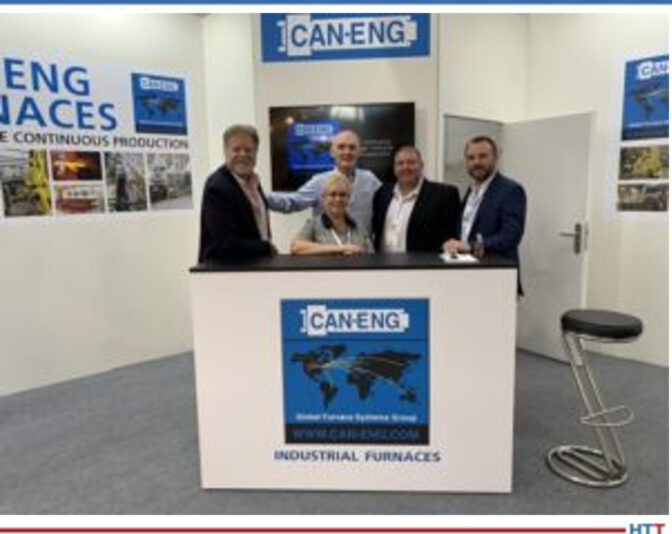
Doug Glenn with CAN-ENG at THERMPROCESS. Left to right: Michael Klauk, Doug Glenn, Theresa Eagles, Tim Donofrio, and Scott Cumming.
Source: Heat TreatToday
You Should Have Been There
This brings me to the main message of this column: You should have been there! If you work for a manufacturer who has in-house heat treat operations, a commercial heat treater, or a supplier to the North American thermal processing market, you should have been there! The breadth of technologies and variety of capabilities on display is unparalleled. There was something for everyone. Besides, it is a GREAT cultural experience to attend this event and spend some time in the evenings in Düsseldorf’s Altstadt (old city) enjoying some Altbier, excellent food, and outstanding people watching!
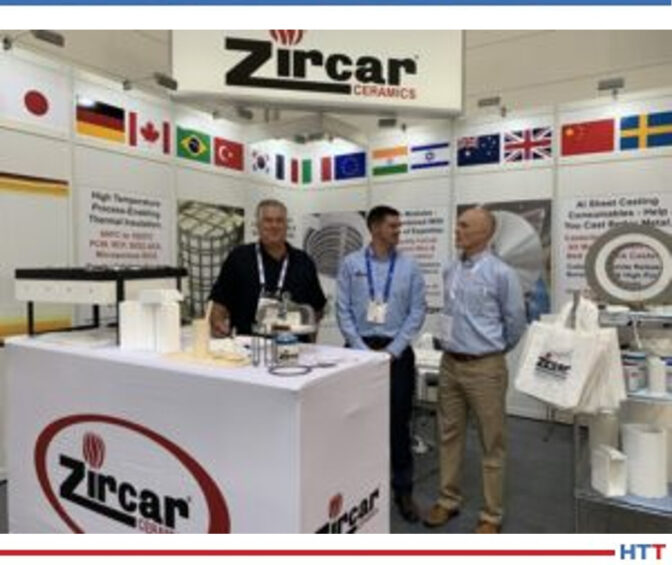
Doug Glenn with Zircar Ceramics. Left to right: David Hamling, Philip Hamling, Doug Glenn.
Source: Heat TreatToday
THERMPROCESS Visits
This page gives a preview of several THERMPROCESS visits. You can find a more complete group of photos toward the end of this edition. See pages 50- 51.
Contact Doug Glennat doug@heattreattoday.com
Find heat treating products and services when you search on Heat Treat Buyers Guide.com
When it comes to optimizing the working life and overall performance of heat treatment alloy castings, proper alloy selection and design based on the intended application is a critical starting point. Discover the variables behind alloy selection and design and the additional factors that contribute: furnace maintenance, casting inspection, and cost reduction strategies.
This Technical Tuesday article was composed by Matthew Fischer, manager of Technical Sales, Castalloy Group for Heat Treat Today'sAugust 2023 Automotive Heat Treating print edition.
Alloy Selection and Design Criteria
Matthew Fischer
Manager of Technical Sales for Heat Resistant Products
Castalloy Group NA
Source: Castalloy Group
Optimal design and alloy composition for any heat treatment casting always requires careful consideration of a number of key operating variables. This is the only way to guarantee the part will deliver maximum utilization and efficiency for the intended application.
These variables include:
Anticipated service and maximum operating temperature
Size, orientation, and weight of the load
Thermal cycling and/or quenching
Range of temperature cycling
Frequency of temperature cycling
Rate of change of temperature
Type of atmosphere or other corrosive conditions of the application
Type of quenching or cooling
Size, shape, and weight of part(s)
How are the parts loaded and oriented? (e.g., manually, robotically, individually, bulk)
How is the alloy supported in the equipment? (e.g., rails, hearth, rollers, piers)
In addition, there are fundamental factors that heavily influence optimal component design and alloy composition. For instance, the type of furnace used (e.g., box, pit, integral quench, continuous), alloy handling mechanism (fixture and tray), and application process (e.g., carburizing, normalizing, annealing, austempering, vacuum heat treating) all have an important role to play. It is worth noting, however, that the decision-making process is a fine balancing act that isn’t necessarily evenly weighted. While a specific alloy composition may Fiaddress the majority of performance needs, it may hinder others. Prioritizing end-use performance traits is therefore essential.
Furnace and Process Environment Maintenance
Figure 1. Cast tray and fixtures
Source: Castalloy Group
How furnaces and processes are performance monitored and maintained is also key when seeking to optimize the performance and lifespan of heat treatment alloy castings. The specific type of furnace will dictate exact equipment and process maintenance requirements, but there are several universal best practice procedures and guidance processes that should be followed.
For instance, the Automotive Industry Action Group (AIAG) has established CQI-9 (Continuous Quality Improvement) standards for heat treatment. These standards provide the guidelines for a continuous cycle of assessment, planning, and improvement with respect to heat treat processing and due care of handling customer parts. The CQI-9 standards direct the heat treater to have and maintain the necessary equipment and associated control instruments used to monitor and record the furnace process operating parameters. They also promote the proper furnace operating process environment. However, the standards do not comprehensively address the overall maintenance requirements of the furnace and process environment equipment. Generally, yearly scheduled maintenance is important to the long-term successful continuous operation of furnace equipment. Lack of or intermittent maintenance can lead to unplanned shutdowns. Here are some of the most common maintenance issues to monitor and remedy:
Example 1: Support Misalignment
If base tray support mechanisms are in alignment (in the direction of travel) and flat (level throughout) to provide proper support of the base tray and associated fixtures and parts, then the tray should move through the furnace equipment without issue, provided the tray is in good operating condition. However, if there are broken rails or piers — or broken/deformed roller rails or wheels — then over time the tray may exhibit wear, deformation, cracks, or breaks.
Example 2: Transfer Mechanism Misalignment
If the transfer mechanisms are square to the tray (in the direction of travel) and level throughout, providing proper contact with the base tray, then the tray should move through the furnace equipment without issues, provided the tray is in good operating condition. However, if there are misaligned transfer mechanisms (pusher rods, pusher head, handler head etc.), then over time the tray may exhibit associated wear, deformation, distortion, cracks, or breaks.
Figure 2. Flat level surface and tray/grid
Source: Castalloy Group
Example 3: Uneven Heating
Although the furnace may be able to maintain an average furnace temperature as measured by a single control thermocouple, there may be uneven heating conditions (side-to-side, top-to-bottom, front-to back) due to a variety of factors, which could result in uneven thermal cycling of the alloy castings. This potential non-uniform heating of the alloy could lead to deformation, cracks, or breaks of the alloy castings. The CQI-9 standards work to monitor and address non-uniform heating using a periodic temperature uniformity survey (TUS) of the furnace heating chamber.
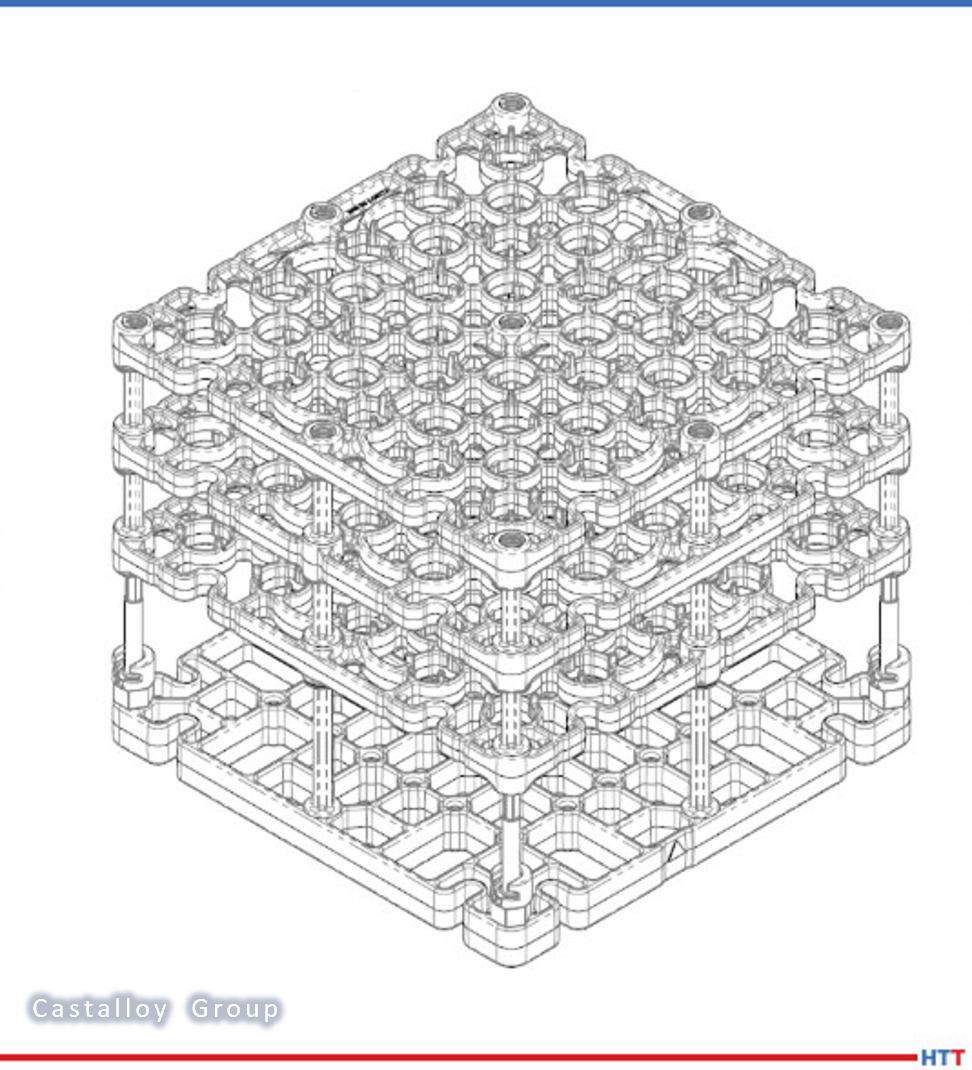
Figure 3. Example of original supplied alloy casting for comparison.
Source: Castalloy Group
Example 4: Non-Uniform Cooling
Although the quench chamber may be able to maintain an average quench medium temperature as measured by a control thermocouple, there may be uneven cooling conditions within a load due to a variety of factors, which could result in uneven thermal cycling of the alloy castings. If left unchecked, any of these issues may result in unintended wear, deformation, distortion, cracks, or breaks of the alloy castings. Furnace material handling issues may also result in an unplanned equipment downtime and productivity loss.
Alloy Castings Inspection
Alloy castings (fixtures, trays, grids) should be inspected periodically to ensure they are in adequate working order. This inspection could be performed when the furnace equipment is taken out of operation for summer or winter maintenance inspections and shutdowns. The main areas to consider are flatness, squareness, and proper proportion.
Damaged component
Source: Castalloy Group
Flatness
Trays, grids, and fixtures should remain flat or level across the width and length. Sagging, bowing, warping, or twisting can cause material handling issues within furnaces and associated process equipment. A simple method to check the flatness is to have a table with a flat and level surface where the tray, grid, or fixture may be placed to check and observe the flatness of the alloy casting. An alternate method to check the alloy casting flatness would be to use a level across the casting to check flatness.
Squareness
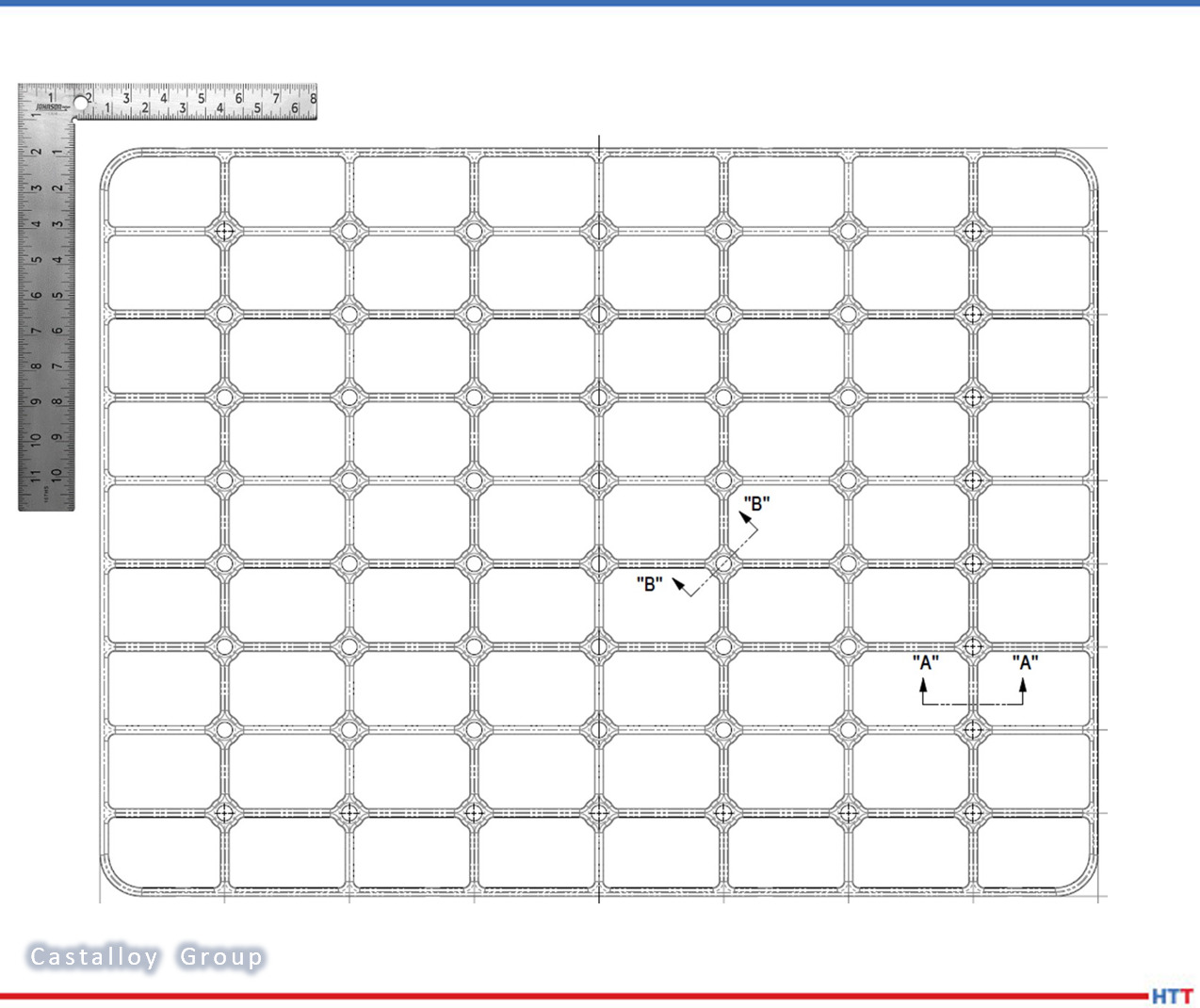
Trays, grids, and fixtures should remain square across the width and length. Being out of square can cause material handling issues within furnaces and associated process equipment. A simple method to check the squareness is to have carpenter’s square tool where the tray, grid, or fixture may be examined to observe the squareness of the alloy casting.
If the tray used in the heat treatment equipment is an assembly of trays, then each tray should be examined for squareness in all four corners. Trays that are out of square may cause tracking problems in the material handling of the furnace, or associated equipment, and should be replaced.
Figure 4. Square tool and tray/grid
Source: Castalloy Group
Proper Proportion
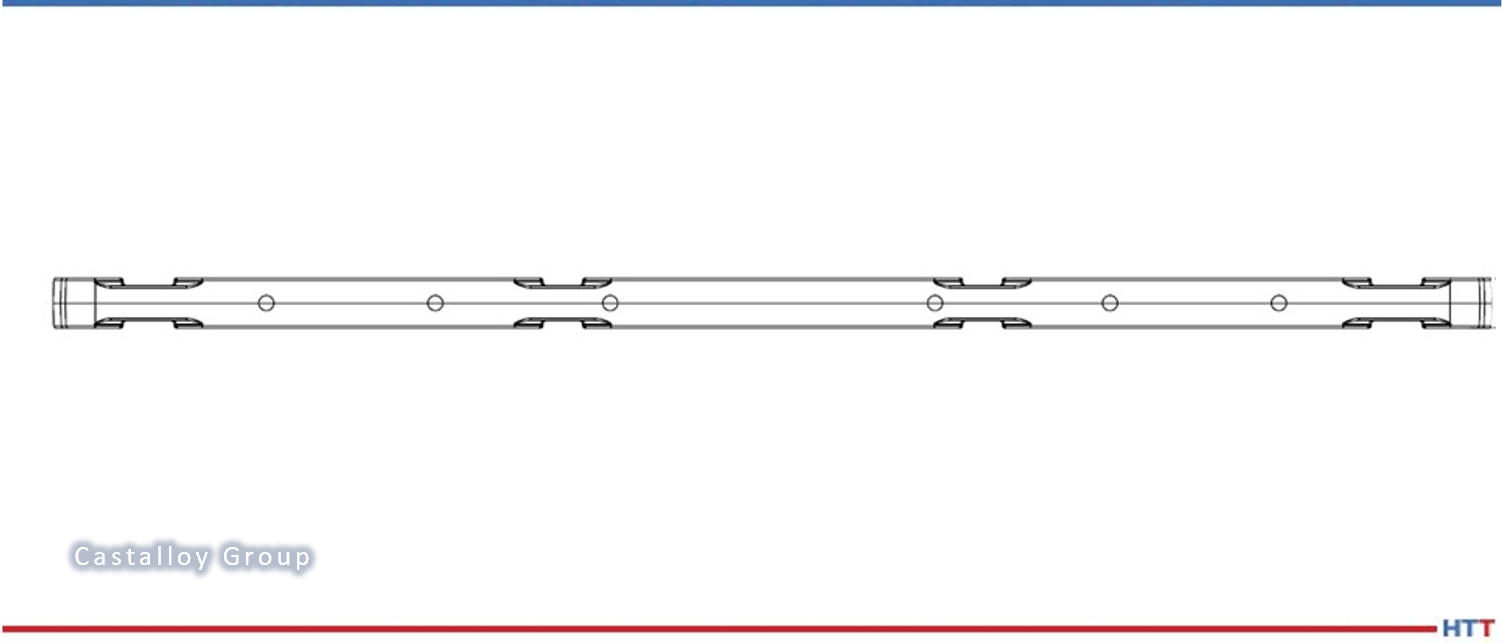
Trays, grids, and fixtures should remain in proper proportion as originally designed. Having bulges or large breaks that are outside of the alloy dimensional alignment compared with the originally supplied alloy casting can cause material handling issues within furnaces and associated equipment. A simple method to check the dimensional proportion is to have a picture or drawing of the originally supplied alloy casting. The tray, grid, or fixture can be compared with this in order to observe the overall soundness of the alloy casting. Suspect castings should be removed from daily operation to prevent potential material handling and associated equipment maintenance issues. An alternative to visual inspection is to make a simple jig that can be used to confirm the dimensional integrity of the alloy casting. Observable patterns of proportional changes within a common area of the alloy castings may indicate a potential issue occurring within the heat treat equipment that should be monitored and investigated before it becomes a major equipment issue and causes an unplanned equipment shutdown.
Optimizing Alloy Castings Using Periodic Purchases
Figure 5. Jig tool to check proportion
Source: Castalloy Group
Periodic purchases of alloy castings should be planned and budgeted annually to maximize casting working life, to minimize process interruptions due to potentially expired useful life of alloy castings, and to manage future expenditures for replacement alloy casting purchases.
In general, budgeting for a percentage of alloy purchases over a two to three- year period, depending on current and planned future operations, would be supportive of continuous production operations. The periodic alloy purchase is then integrated into the existing production operations and suspect alloy castings, if any, can be removed from daily production operations.
There are multiple approaches that can be implemented and adjusted according to individual plant production needs:
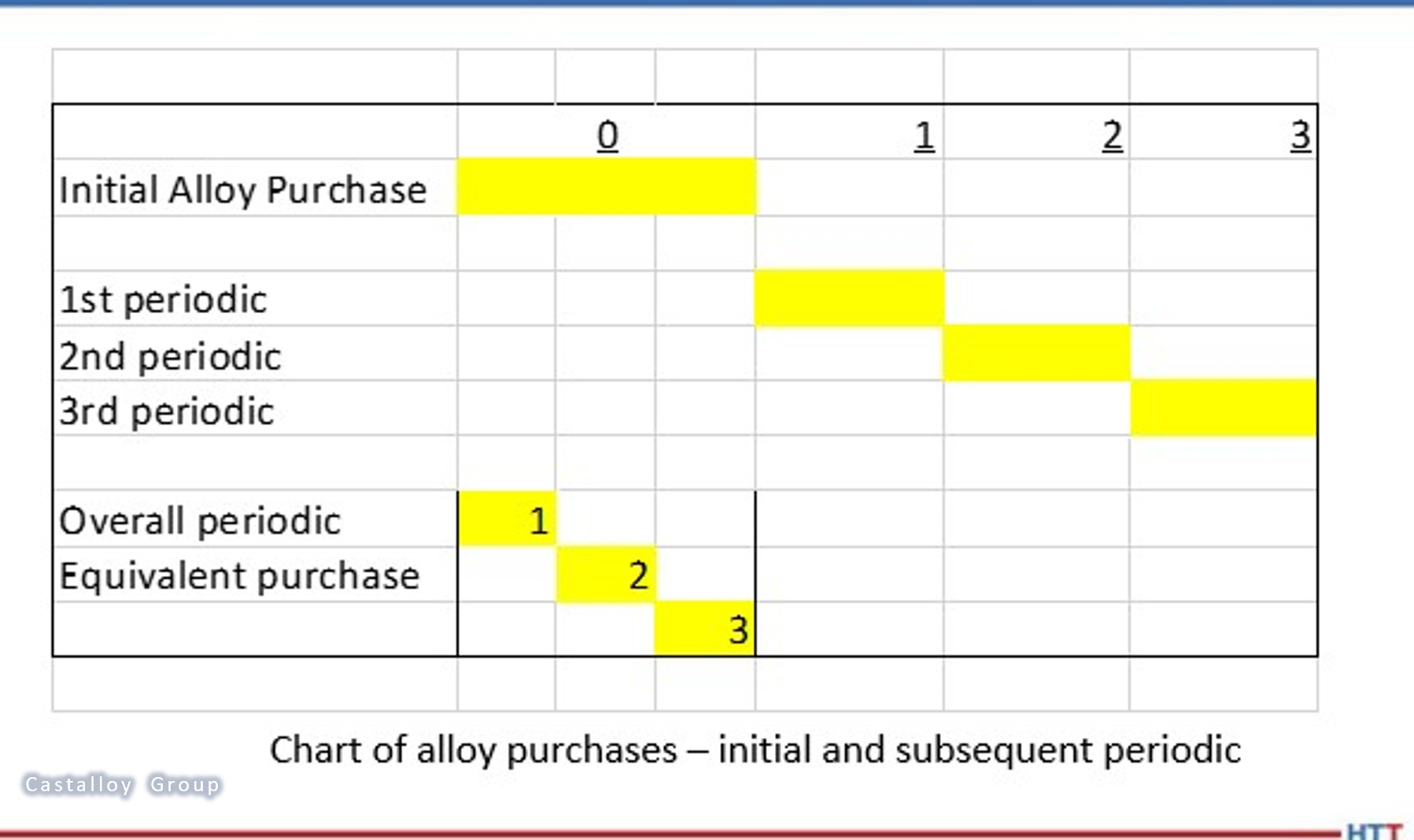
One approach to consider is the purchase of one-third of the total alloy purchase per year over the following three years after an initial purchase. In a continuous daily production operation, the initial purchased quantity of alloy castings will have been replaced, if needed, over the elapsed time.
An alternate approach to consider is a staggered percentage over three years. For example, 20–25% replacement the first year; 30–35% replacement the second year; 35–40% replacement the third year, adjusted as necessary based on current operating and business conditions.
This approach would also be useful for ramping up alloy quantity needs to meet increasing demand over time and could be an opportunity to address potential delivery time requirements with coordinated planned periodic purchases.
Additionally, intermixing newly purchased alloy castings along with production alloy castings, may provide for extended life for the latter.
Scrap Alloy Recycling: New Alloy Purchase Credit for Returning Your Scrap Alloy Material
When alloy castings are no longer usable in daily heat treatment operations, it can be advantageous to sell them back as scrap to the alloy supplier. The supplier should be able to provide a scrap repurchase credit that can be used for future purchases of new alloy castings.
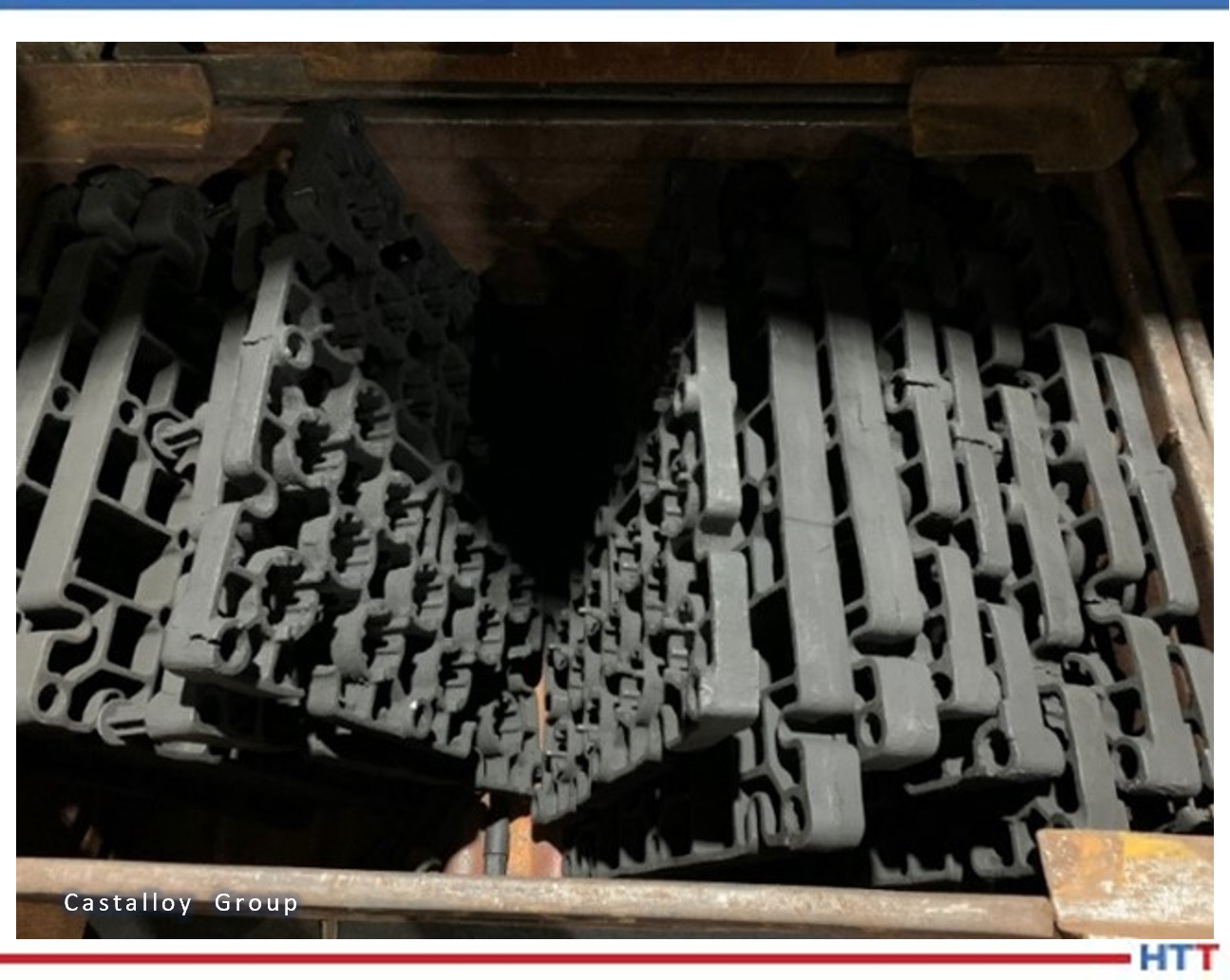
Figure 6. Visual demonstration of capital flow for initial and subsequent alloy purchases
Source: Castalloy Group
Generally, this scrap alloy repurchase credit may be used in whole or in part as directed by the customer for new replacement alloy casting purchases.
As well as being cost-efficient, scrap alloy castings recycling supports the long-term sustainable use of metals, minimizes the potential negative impact on the earth’s environment, and reduces the overall carbon footprint of both alloy user and supplier.
Summary
Figure 7. Typical scrap alloy trays and grids Source: Castalloy Group
To review, improving the working life of heat treating cast alloys starts with design and is maintained with factors that account for the full alloy casting life:
Choosing the right design and alloy composition for heat treatment castings is fundamental to optimizing their working longevity and performance. This decision can only be made by carefully considering key aspects of the intended casting
Maintaining furnace equipment and process environment operating conditions will also assist in maximizing the working life and overall performance of the alloy castings.
Alloy casting inspection will support heat treat operations and minimize potential equipment downtime by providing evidence of furnace equipment issues or malfunction.
Periodic budgeted alloy casting purchases support heat treat operations, will help maximize uptime, and minimize potential downtime associated with suspect or failing alloy castings.
Scrap (expired useful life) alloy repurchases can be used to off set the costs associated with new alloy casting purchases. Scrap alloy recycling also minimizes negative impact on the environment.
About the Author:
Matthew Fischer is the manager of Technical Sales for Heat Resistant Products at Castalloy Group NA. He has thirty years of experience in furnace design and applications working for a leading heat treat furnace equipment supplier. Additionally, he has worked for several years as a senior heat treat manufacturing engineer for a global tier-1 automotive company as well as in the controls and instrumentation fields across multiple industries, including thermal processing and heat treating.
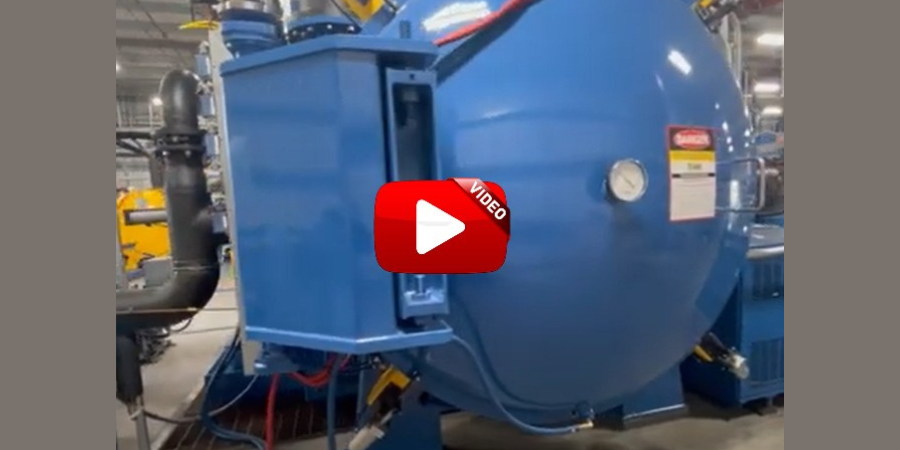
A European subcontractor for the automotive and racing industries as well as a partner for teams participating in Formula 1 races has acquired a second vacuum furnace.
The order from SECO/WARWICK includes a Vector® vacuum furnace with 15 bar abs high pressure gas quenching, and high vacuum (HV). The furnace will process engine and gear components for vehicles racing large-scale motorsport competitions.
This partner provides carburizing, and various heat treatment services for titanium, aluminum and precipitation hardening of alloys. These services must be of aviation quality within the demanding timeframes required by European F1 teams.
In the new SECO/WARWICK furnace, the customer will execute vacuum heat treatment of titanium and its alloys and will perform vacuum carburizing processes for steel elements. Titanium alloys are very strong materials, but at the same time soft and plastic, which makes them difficult to machine. Low thermal conductivity and density creates an environment where the cutting material is subject to a strong thermal load and tends to harden.
The FIA regulations for Formula 1 racing specify in detail what material a part must consist of and how it must be manufactured. Titanium or titanium alloys are used for many engine parts and suspensions because they have high toughness, strength, and ductility, and are corrosion resistant. Formula 1 car components must be manufactured precisely and safely in both prototype and small series production.
The purpose of this particular model of Vector furnace will be unique, as carburizing and hardening of parts such as gears for engines and transmissions for high-performance F1 sports cars are not the typical processes for which SECO/WARWICK supplies its furnaces.
Commenting on this order, Maciej Korecki, vice president of the Vacuum Segment at SECO/WARWICK, explained, "The vacuum furnace system which will be delivered to England has numerous options such as cryogenic processing, convection, FineCarb® vacuum carburizing, pre-nitriding for PreNitLPC® carburizing technology or low-pressure carbonitriding LPCN."
Find heat treating products and services when you search on Heat Treat Buyers Guide.com
Sometimes our editors find items that are not exactly "heat treat" but do deal with interesting developments in one of our key markets: aerospace, automotive, medical, energy, or general manufacturing.
To celebrate getting to the “fringe” of the weekend, Heat Treat Today presents today’s Heat Treat Fringe Friday: a negotiation established between major airline players to expand maintenance capabilities.
Anne Brachet
EVP
Air France-KLM Engineering & Maintenance
Source: LinkedIn
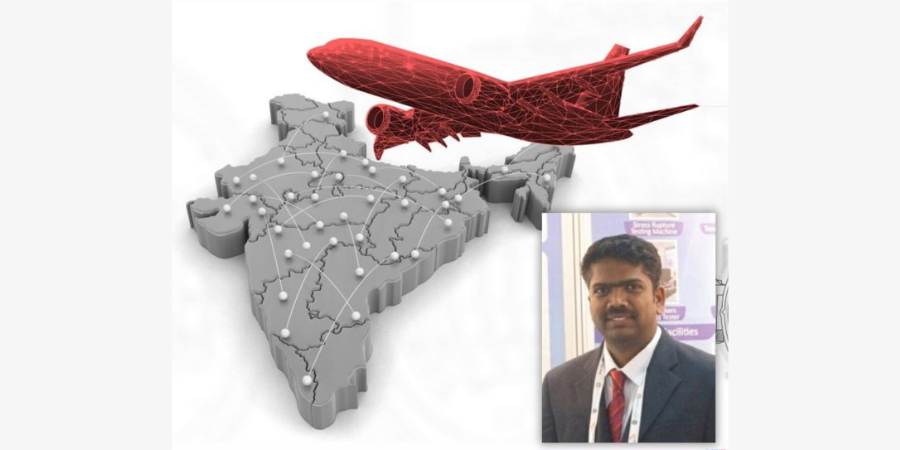
Airbus is negotiating establishment of a new joint venture with Air France SA to provide component maintenance services (maintenance, repair, overhaul, or MRO) for the global A350 fleet. Looking at a 2024 start, the long-term maintenance needs of A350 operators will be addressed.
The Airbus A350 is a twin-engine wide-body aircraft in service on long-range routes with more than three dozen carriers and leasing agencies. According to Airbus, there are more than 550 A350 jets currently in service and more than 1,000 on order.
“This project aims to bring customers the best expertise of our two companies on a product as high-tech as the A350,” stated Anne Brachet, EVP at Air France-KLM Engineering & Maintenance.
Find heat treating products and services when you search on Heat Treat Buyers Guide.com
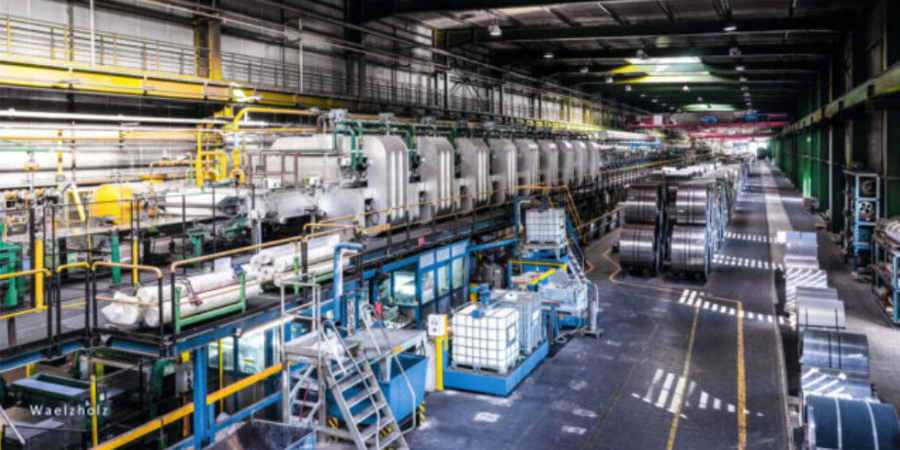
A long-term test of high-efficiency and ultra-low-emission burner technology from WS Wärmeprozesstechnik at Waelzholz demonstrated that hydrogen can be used as a fuel gas to heat silicon strip lines.
Energy-efficient and low-emission heating of silicon strip lines using hydrogen as a fuel was the focus of an extensive test C.D. Wälzholz GmbH & Co. KG successfully completed together with WS Wärmeprozesstechnik in 2022.
As early as summer 2021, WS delivered several patented FLOX® burners for the installation in an existing silicon strip line. This line uses SiSiC radiant tubes to heat the furnace to a temperature of approximately 1922°F. After commissioning, the WS burners successfully operated with 100% hydrogen for one year.
The long-term test showed that a switch to hydrogen as a fuel is very possible for the furnace under investigation. Commenting on the possibility of such a switch, Mr. Peter Höfinghoff, expert for thermal process engineering in the technical office at Waelzholz, concluded: “Even after a year of operation, the burners are running very well and without faults. We were able to sufficiently demonstrate that by using WS burners, a conversion to hydrogen is technically feasible without any problems.”
With the findings from the test operation, the company is laying a foundation stone for the future hydrogen strategy at its headquarters in Hagen.
Find heat treating products and services when you search on Heat Treat Buyers Guide.com
The four heat treat industry-specific economic indicators gathered by Heat TreatToday each month --- starting in June of this year --- are predicting continued growth along with some economic contraction in the month of September.
The numbers, which were compiled the first week of September, show that responding parties anticipate inquiry levels will continue to be down for September as compared to August, but that the value of September bookings shows some growth. Backlogs are anticipated to grow by several points, while the overall health of the manufacturing economy is down. Please keep in mind that this is only the 4th month of data collection, so keep following this study as this bank of information builds.
The results from this month’s survey (September) are as follows; numbers above 50 indicate growth, numbers below 50 indicate contraction, and the number 50 indicates no change:
Anticipated change in the Number of Inquiries from August to September: 48.4
Anticipated change in Value of Bookings from August to September: 54.3
Anticipated change in Backlog Size from August to September: 53.5
Anticipated change in the Health of the Manufacturing Economy from August to September: 49.0
Data For September 2023
The four index numbers are reported monthly by Heat TreatToday and made available on the website.
Heat TreatToday'sEconomic Indicatorsmeasure and report on four, heat treat industry indices. Each month, approximately 800 individuals who classify themselves as suppliers to the North American heat treat industry receive the survey. Above are the results. Data started being collected in June 2023. If you would like to participate in the monthly survey, please click here to subscribe.
Find heat treating products and services when you search on Heat Treat Buyers Guide.com
Renewable fuels or hydrogen have entered the scene as these are fuels that contain little or no carbon. So, no carbon in the fuel means no CO2! These fuels present an excellent opportunity to significantly reduce carbon.
This Sustainability Insight article was composed by Brian Kelly, manager of Application Engineering at Honeywell Smart Energy and Thermal Solutions (SETS) and president of the Industrial Heating Equipment Association. It can be found in Heat Treat Today's August 2023 Automotive Heat Treatingprint edition.
The need to understand the impact of greenhouse gases (GHGs), especially carbon-based emissions, on climate change is gaining much more interest recently from organizations that have industrial heating processes. Most industrial heating processes are fueled by carbon-based fossil fuels such as natural gas, propane, fuel oil, diesel, or coal. In basic terms, if you have combustion processes in your organization, you are emitting carbon (CO2). Impacts on climate change due to these carbon emissions have prompted government and corporate actions to reduce carbon. These actions are creating unique new opportunities for more sustainable and lower carbon process heating methods. In this article, we will focus on ways to reduce carbon in typical fossil fuel fired heat treat thermal processes. First step: Figure out where you are today. Do you know?
Assess Your Carbon Footprint
Brian Kelly
Image Source: Honeywell
More and more companies are interested in understanding their GHG/carbon footprints, so they can determine what processes are their biggest CO2 offenders, and on what assets to focus on in order to have the largest impact on reducing carbon. Whether your thermal processes are being heated by fossil fuels (typically natural gas) or electrically, each will have a carbon footprint. Fuel gases are being burned to provide the heat and they produce CO2 as a result. Most electrical power is currently being produced by fossil fuels, so electricity will have a CO2 amount associated per kW. What can be done to burn less fuel in your furnaces or ovens, which directly relates to reducing CO2?
Tune Your Combustion Systems
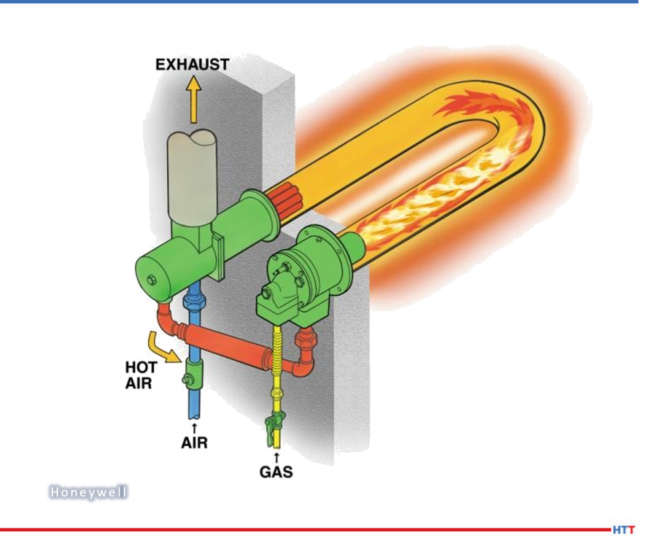
Radiant tube burner with plug recuperator in a U-tube
Source: Honeywell
Over time combustion systems drift and are not at their optimum air/fuel ratio. By simply tuning your burner system on a routine basis, you can fire at the optimum air/fuel ratio for the process and be as efficient as possible. For example, if a furnace is firing on natural gas, operating at 1800°F, and currently operating at 35% excess air, tuning your burners to 10% excess air could save approximately 15% in fuel consumed. The fuel costs will be reduced, and the resulting CO2 will be reduced by that same percentage!
Maintain Your Furnaces/Ovens
A simple review of your furnaces or ovens to observe any hot spots, openings, faulty seals, or refractory issues will identify areas that will cause your systems to operate less efficiently, thus using more energy. Repairing these problems and consistently maintaining them will have the systems running more efficiently and producing as little carbon as possible.
Upgrade Your Firing Systems To Be More Efficient
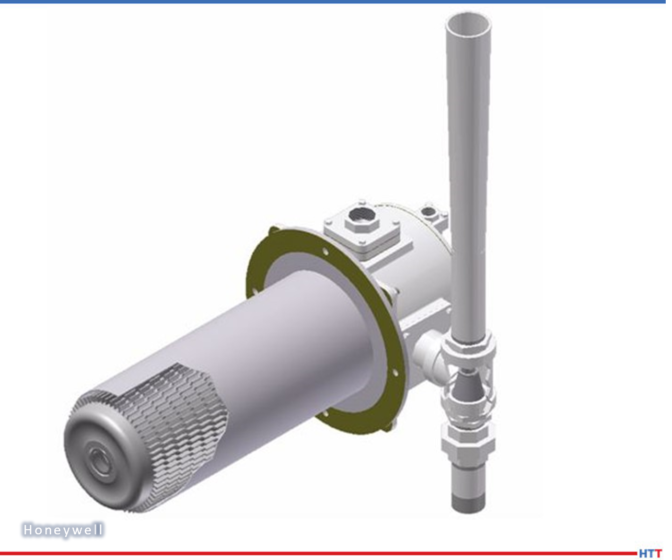
Direct fired self-recuperative burner
Source: Honeywell
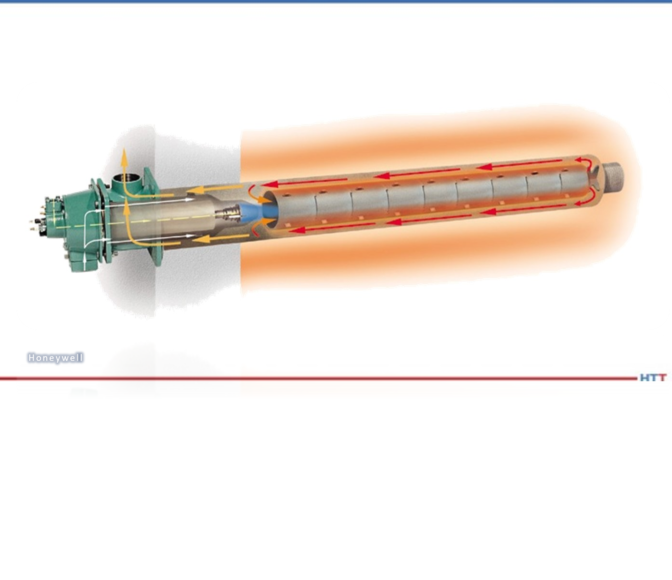
Incorporating preheated combustion air into furnace combustion systems can significantly reduce fuel consumption and therefore the resulting carbon. The two main methods for introducing hot air into a combustion system are recuperation and regeneration. The most popular air preheating method in heat treating applications is recuperation. For a direct fired furnace, this can take the form of a central stack recuperator or self-recuperative burners. Self-recuperative burners have grown in popularity in recent years as they get rid of the need for hot air piping, recuperator maintenance, and most are often pulse fired, which will not only maximize efficiency but also promote temperature uniformity in the furnace and often be lower in emissions. For indirect fired (radiant tube) furnaces, you can apply/add a plug recuperator to an existing cold air fired burner in a furnace that has a U or W-tube to preheat the combustion air or apply self- recuperative burners installed in Single-Ended Radiant (SER) tubes to optimize your furnace firing. The SER tube material can be upgraded to silicon carbide which allows higher temperatures/flux rates that can provide the opportunity to increase throughput and reduce the possible CO2 per cycle.
Combustion air preheating can result in energy savings of close to 25% over cold air combustion.
Renewable Fuels/Hydrogen
Renewable fuels or hydrogen have entered the scene as these are fuels that contain little or no carbon. So, no carbon in the fuel means no CO2! These fuels present an excellent opportunity to significantly reduce carbon. Hydrogen has been of interest because it has the opportunity to be a zero-carbon industrial fuel when produced with renewable energy such as wind, solar, hydro, or nuclear power. As these methods become more prevalent, they bring down the price of hydrogen and increase its availability. This could be a significant driver to greatly reduce CO2 in thermal processes. These topics as well as many others are being discussed in an on-going Sustainability Webinar series hosted by IHEA to provide education and insight into the ever-changing sustainability landscape.
Single ended self-recuperative radiant tube burner
Source: Honeywell
About the author:
Brian Kelly is manager of Application Engineering for Honeywell Smart Energy and Thermal Solutions (SETS) and current president of the Industrial Heating Equipment Association (IHEA).
Find heat treating products and services when you search on Heat TreatBuyers Guide.com