Additive manufacturing (AM) has transformed how metal parts are designed and produced, but it is also changing the role of thermal processing. As engineers develop alloys specifically for additive manufacturing — and tailor process parameters to achieve increasingly complex microstructures — heat treatment is evolving from a downstream finishing operation into a critical part of the overall materials design strategy.
This Technical Tuesday installment is a Q&A with Heat Treat Today Digital Editor Pat Reyes, in which Olga “Dr. O” Ivanova shares her perspective on what that shift means for manufacturers with in-house heat treating and commercial heat treaters.
With more than 15 years of experience in advanced materials and additive manufacturing, Olga “Dr. O” Ivanova is the founder of Dr.O Strategies, where she advises executives, startup leaders, and engineering teams on additive manufacturing technology integration and commercialization. A 2026 Additive Manufacturing Users Group (AMUG) DINO Award recipient, she brings expertise spanning materials chemistry, process design, and performance validation, helping organizations bridge the gap between scientific innovation and scalable production.
In the discussion that follows, Ivanova explains why additive-specific microstructures demand a different way of thinking about thermal processing, how emerging alloy systems may reshape traditional heat treatment practices, and why thermal processors have an opportunity to become collaborators in materials development rather than simply the final stop in the manufacturing chain.
From Process to Strategy
Pat Reyes: How do you see the relationship between material design, additive process parameters, and thermal processing evolving over the next decade?
Dr. O: I see this evolving from sequential handoffs to integrated co-design. Today, these disciplines operate in silos — alloy selection, then build parameters, then heat treatment, each handed off to the next.
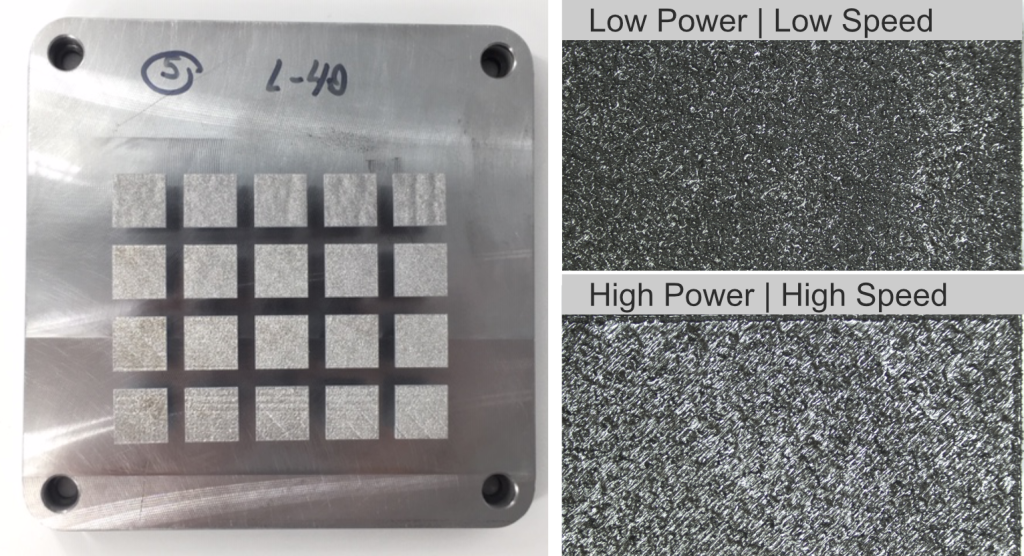
AM breaks that model. The thermal history during printing shapes the microstructure as much as the alloy chemistry does. Laser power, scan strategy, layer thickness, cooling rate — all of them determine what the heat treater receives.
Consider a nickel superalloy like Inconel 718. The powder morphology affects how it absorbs laser energy, which determines the as-built stress state, which governs whether a standard aging cycle actually hits its target. Change any one variable and you change the outcome.
Over the next decade, the winning question will shift from “How do we heat treat this alloy after printing?” to “How do we design the alloy, print parameters, and thermal strategy together?”
Heat treatment becomes a design variable, not a corrective step.
Pat Reyes: What do thermal processors most need to understand about additive-specific microstructures?
Dr. O: The most important concept: AM does not replicate conventional microstructures. It produces non-equilibrium structures that wrought and cast materials never experience.

Rapid melting and solidification cycles — repeated thousands of times per build — create metastable phases, columnar grains aligned with the build direction, and complex residual stress states. A thermal processor who treats an AM part as “just another batch” misses what makes it unique.

You might receive a familiar alloy like Ti-6A1-4V or Inconel 718, but the starting microstructure can be fundamentally different from what the standard heat treat schedule expects.
Residual stress relief isn’t just about preventing distortion. It’s about unlocking predictable properties. And HIP porosity closure must happen at the right stage relative to solution treatment and aging. These aren’t small differences, they’re the difference between reproducibility and scatter.
I’d point practitioners to standards like ASTM F3055-22 for qualification frameworks. But the principle holds: applying traditional schedules designed for wrought stock may solve the wrong problems or create new ones.
Rethinking Heat Treatment for AM
Pat Reyes: Are current heat treatment approaches generally sufficient for metal AM parts?
Dr. O: For established alloys in mature applications, yes, adapted conventional cycles generally suffice. If your goal is matching wrought performance in aerospace structures, current methods work.
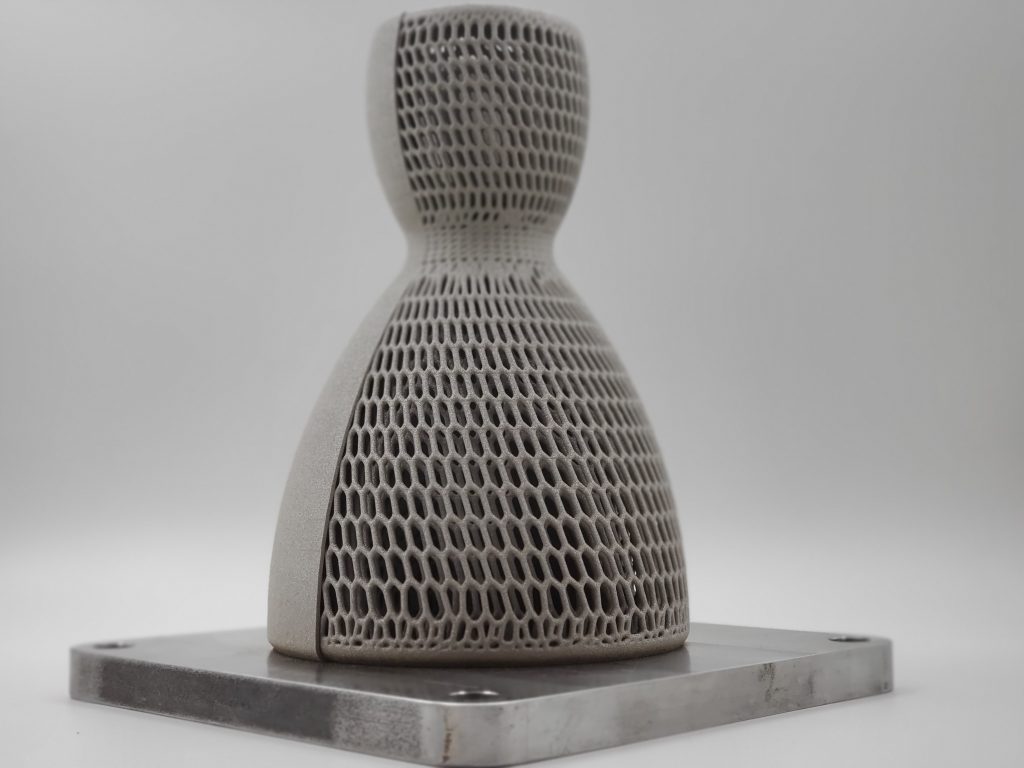
But I expect tailored thermal strategies to become the norm as AM matures. The reason: many AM materials are produced under thermal conditions that didn’t exist when traditional heat treat standards were written.
Two developments will push beyond today’s methods.
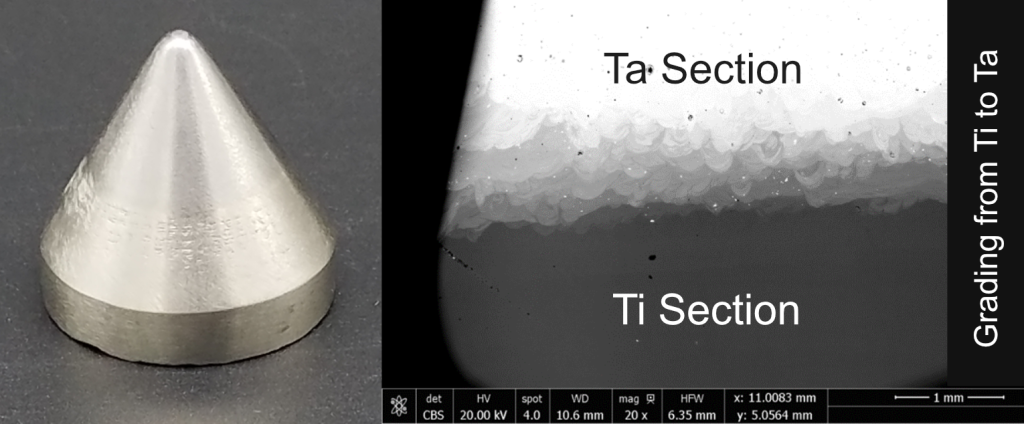
First, custom thermal cycles designed around printed microstructures rather than inherited from legacy routes. Second, spatially selective processing (e.g., different zones needing different treatments within a single component) for multi-material and functionally graded parts.
I’m also watching in-situ heat treatment during the build — re-melting passes that serve dual purposes. This blurs the line between process and post-processing entirely.
Pat Reyes: Will future AM alloys be designed with downstream thermal processing in mind?
Dr. O: Absolutely. One of the most exciting shifts is the emergence of alloys designed specifically for AM rather than adapted from casting or forging.
Future alloys will be engineered with solidification behavior, cracking resistance, residual stress management, and post-processing response as design criteria from day one.
When you’re developing an aluminum-copper or titanium-niobium variant for LPBF, the precipitation hardening response must be part of the alloy design brief, not an afterthought.
We’re moving toward process-aware metallurgy: How does this composition behave under rapid solidification? What thermal pathways unlock our target properties? Can we design an alloy that forgives minor process variation?
Organizations embedding this thinking early — treating thermal response as a design lever — will have the advantage when scaling production.
The Next Generation of Materials
Pat Reyes: What emerging material systems should thermal processors watch?
Dr. O: Beyond Ti-6A1-4V and Inconel 718, these systems deserve attention:
- High-entropy alloys: Alloys like CoCrFeMnNi (Cantor alloy) offer unusual strength-toughness combinations. Their sluggish diffusion kinetics mean standard solution treatment times may need re-evaluation; these alloys don’t homogenize on conventional schedules.
- Refractory metal composites: Systems based on Tantalum-Tungsten (Ta-W) or Molybdenum Lanthanum oxide (MLA) target extreme-temperature applications. Oxidation control during heat treatment remains the critical challenge; protective atmospheres and ramp rates matter more than with conventional alloys.
- Additive-specific aluminum alloys: Like Scalmalloy® (A1-Mg-Sc-Zr), these are advancing rapidly. Their precipitation behavior differs from wrought 6061 or 7075; aging cycles optimized for cast stock may miss the peak hardness window entirely.
- Copper alloy systems: Grades like GRCop-84 or C17000 are gaining traction in thermal management and electronics. Their high thermal conductivity affects cooling rates during printing and heat treatment alike, requiring adjusted soak times to ensure uniform property development.
For processors expanding into AM services: build relationships with alloy developers early. These materials move faster than published standards can keep up.
Pat Reyes: How might nanomaterial-enhanced systems affect thermal processing?
Dr. O: This is where my focus has been most intensive, and I see both significant opportunity and genuine complexity.
Nanomaterials can refine grain structure, suppress hot cracking, and unlock new precipitation mechanisms. But they also introduce new variables: agglomeration risk, inconsistent dispersion, unexpected interactions during thermal cycling.
The challenge is that nanomaterial behavior under heat treatment doesn’t follow bulk-phase predictions. You might get beneficial grain refinement in one temperature window and particle coarsening in another. A “standard cycle” for a nanoparticle-modified alloy may produce fundamentally different results than for its conventional counterpart.
Where I see real promise: alloys engineered to leverage nanoparticles for localized property enhancement. Imagine a turbine blade where coating regions respond differently to thermal treatment than the core. Spatial control without complex assembly.
Building the Future Together
Pat Reyes: Where do you see the greatest opportunities for collaboration?
Dr. O: The biggest opportunity is moving collaboration upstream. Involve thermal processing specialists before the alloy is finalized and the first layer is printed, not after.
Thermal processing professionals understand phase transformations, microstructural control, and property optimization. Those insights can shape alloy development and process qualification from the start.
Three areas stand out:
- Data sharing: Alloy suppliers publish compositional specs; heat treaters run their cycles. We need closed-loop data. What thermal paths actually deliver target properties for printed microstructures? Without this feedback, progress stalls.
- Co-developed qualification: Aerospace and medical certification is expensive. Joint efforts between materials developers, machine OEMs, and thermal processors could create streamlined pathways instead of ad-hoc testing for every new alloy-part combination.
- Equipment innovation: Furnace technology hasn’t evolved significantly for AM-specific needs. Opportunities exist for sensors that track microstructural transformation in real-time, and adaptive cycles that adjust based on in-situ measurements.
Pat Reyes: What misconception do you wish more thermal processors understood?
Dr. O: That heat treatment can fix poor build quality.
It’s tempting to view post-processing as a corrective step — to assume thermal cycles will close every pore, eliminate every stress concentration, transform every undesirable phase. They won’t.
Heat treatment operates within constraints set upstream. Contaminated powder, excessive lack-of-fusion defects, unpredictable stresses from poor support strategy — no thermal cycle can reverse those fundamentals.

The misconception gets expensive when organizations invest in better furnaces instead of better prints. Quality must be built in first. Heat treatment unlocks potential; it doesn’t manufacture it.
Looking Ahead
Throughout this conversation with Dr. O, one theme emerged consistently. As additive manufacturing matures, thermal processing is becoming less about only completing material processing and more about unlocking material performance not found in traditional processing methods. Dr. O emphasizes that alloy chemistry, build strategy, process parameters, and heat treatment have always been interconnected. The difference today is a growing recognition that optimizing additive manufacturing requires materials scientists, additive manufacturing engineers, and thermal processors to collaborate from the earliest stages of design rather than working sequentially through the production process.
The takeaway is clear: the next chapter of additive manufacturing offers heat treaters more than new work — it offers a seat at the table. By contributing to process qualification, materials development, and production optimization, thermal processors can help shape the future of advanced manufacturing instead of simply responding to it.
About The Expert:

Founder
Dr.O Strategies
Olga “Dr. O” Ivanova is the founder of Dr.O Strategies, where she helps organizations align materials development, additive manufacturing, and commercialization strategies. An Additive Manufacturing Users Group (AMUG) Distinguished INnovator Operator (DINO) Award recipient, she advises manufacturers, startups, and investors on process qualification, alloy development, and technology adoption, with a focus on moving emerging innovations from the laboratory to scalable production.
For more information: Contact Olga “Dr. O” Ivanova at olga@drostrategies.net.
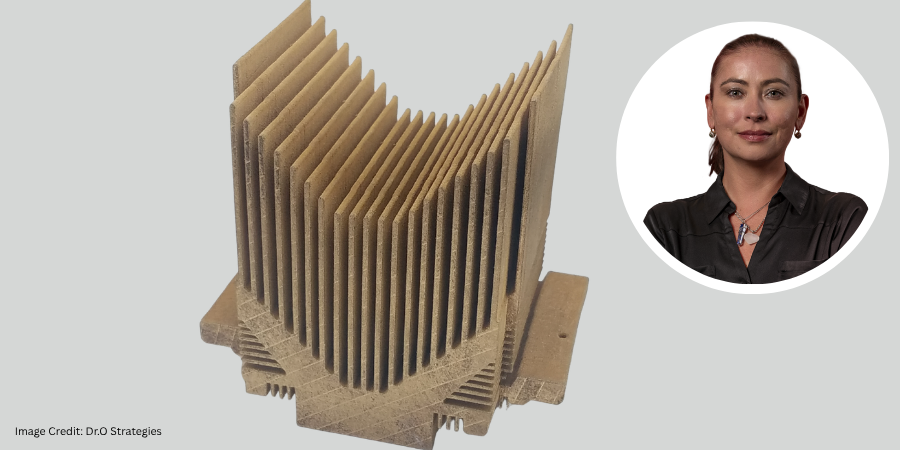
Main image shows an LPBF copper heat sink with thin fins, which demonstrates the complex geometries that require designers and thermal processors to optimize material performance together. | Image Credit: Dr.O Strategies