Heat Treat Todaypublishes twelve print magazines a year and included in each is a letter from the editor. This letter is from the February 2026 Annual Air & Atmosphere Heat Treatingprint edition. In today’s letter,Bethany Leone, managing editor at Heat Treat Today, shares her insights on the restlessness stirred by recent shifts in the heat treat industry — and why sitting with uncertainty, rather than rushing to diagnose it, may be the most intentional form of leadership we can practice right now.
Recently, we have observed the shift in industry brain trust. In fact, if you follow the Heat TreatDaily, there have been a lot of significant acquisitions, announcements of growth, and refocusing of efforts. Yet no singular statement emerges to define what this moment is for the heat treat industry. This constant movement and reorienting is exciting, but what does it mean?
To recap some highlights, a brazing icon retired — Dan Kay, our tribute to him later in this publication (p. 49). Innovator and furnace expert Mark Hemsath joined forces with WINGENS CONSULTANTS as an executive expert. Major industry suppliers continued to consolidate under more international leadership, and we wait to see how priorities at these organizations will be recalibrated.
While all of these changes are decisive moves, there is hardly a definitive direction to describe where the heat treat industry is going. With the world at our fingertips, digital projections and instantaneous AI analysis feed the desire to know what to expect, what to avoid, what to get excited about. Data is the bread and butter of informed decisions, though tempered with discernment. A lack of satisfying answers, however, exposes how easily we can overuse data to create a safety net from uncertainty or seek a quick diagnosis for a discomfort whose true nature may be far more complex.
And so, we find ourselves without clear answers about what these industry shifts ultimately mean. Perhaps some are already making projections, but for me, I’m sitting in a restless state about what we should expect for the rest of the year. Still, restlessness isn’t something to “seek and destroy,” as my immediate inclination often is. Sitting with it can make space for true stewardship.
Stewardship
Stewardship takes the present form. The emphasis is simple: What is in my control now to change, cultivate, care for? Lots of garden terms with this word! This idea of stewardship shows up for me in small ways. The closest I am to gardening is the peace lily who stares at me while my one-year-old takes another swat at her leaves, brown and crinkled from the drafty air. Here’s the thing — stewardship, at least in this season, is not the one-plant garden. It’s knowing to cultivate joy in the one-year-old… and waiting to see if the peace lily survives.
Another key aspect of stewardship is listening. Stewardship happens after the pause that listens to the unsettled state. This attitude allows uncertainty, complexity, and even contradictory messaging. As leaders of wherever life finds us, listening to the noise and waiting through the discomfort of not having an answer is what precedes intentional action.
Waiting for the Meaning
If you have been observing the changes in industry with bated breath, continue the waiting. No need to diagnose. Dedicate yourself this year not to the novel goals of January, but the essential approach of not balking at the restlessness that you may find yourself in. It is enough to tend to what is immediately entrusted to you.
Heat TreatToday offers News Chatter, a feature highlighting representative moves, transactions, and kudos from around the industry. Enjoy these 14 news items, including Haynes International Inc.‘s new hydraulic radial forging line to boost production of high-performance nickel- and cobalt-based alloys, the acquisition of JSA/Metalline by Hubbard-Hall Inc. to expand metal finishing service capabilities across the Midwest, Bodycote‘s achievement of independent validation from Bureau Veritas for its carbon footprint calculator tools, and more!
Equipment
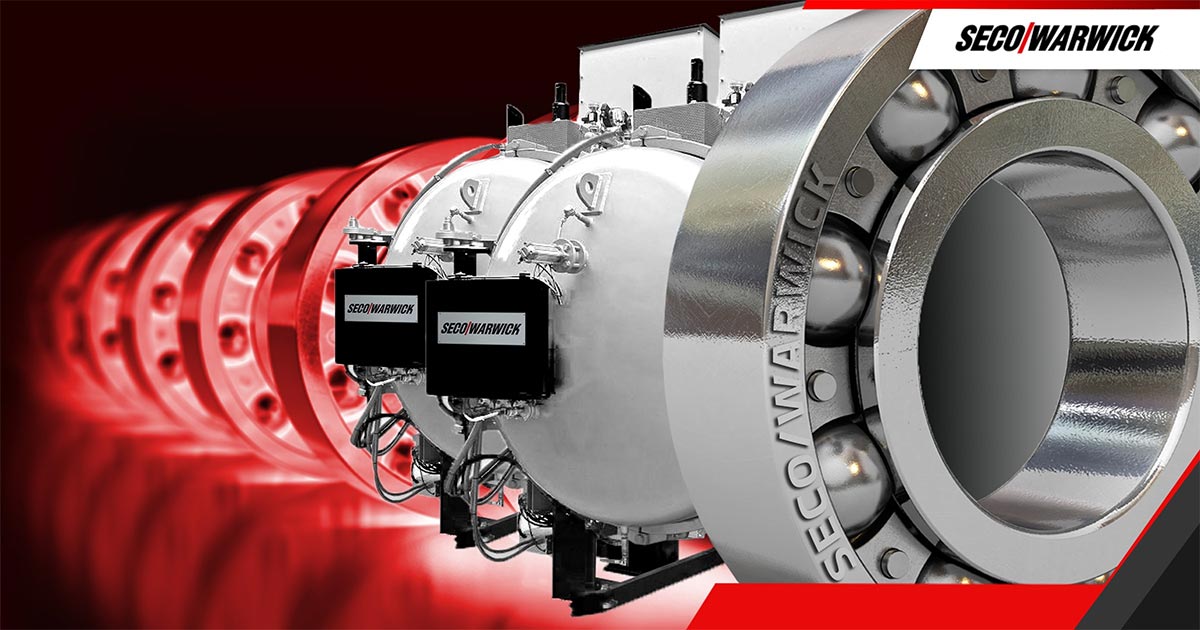
1. A major U.S. bearing manufacturer has ordered two advanced SECO/WARWICK USA vacuum heat treat furnaces, reinforcing its commitment to precision manufacturing and capacity growth. The investment supports rising demand across the bearing industry, where consistent metallurgical performance is critical for industrial and aerospace applications.
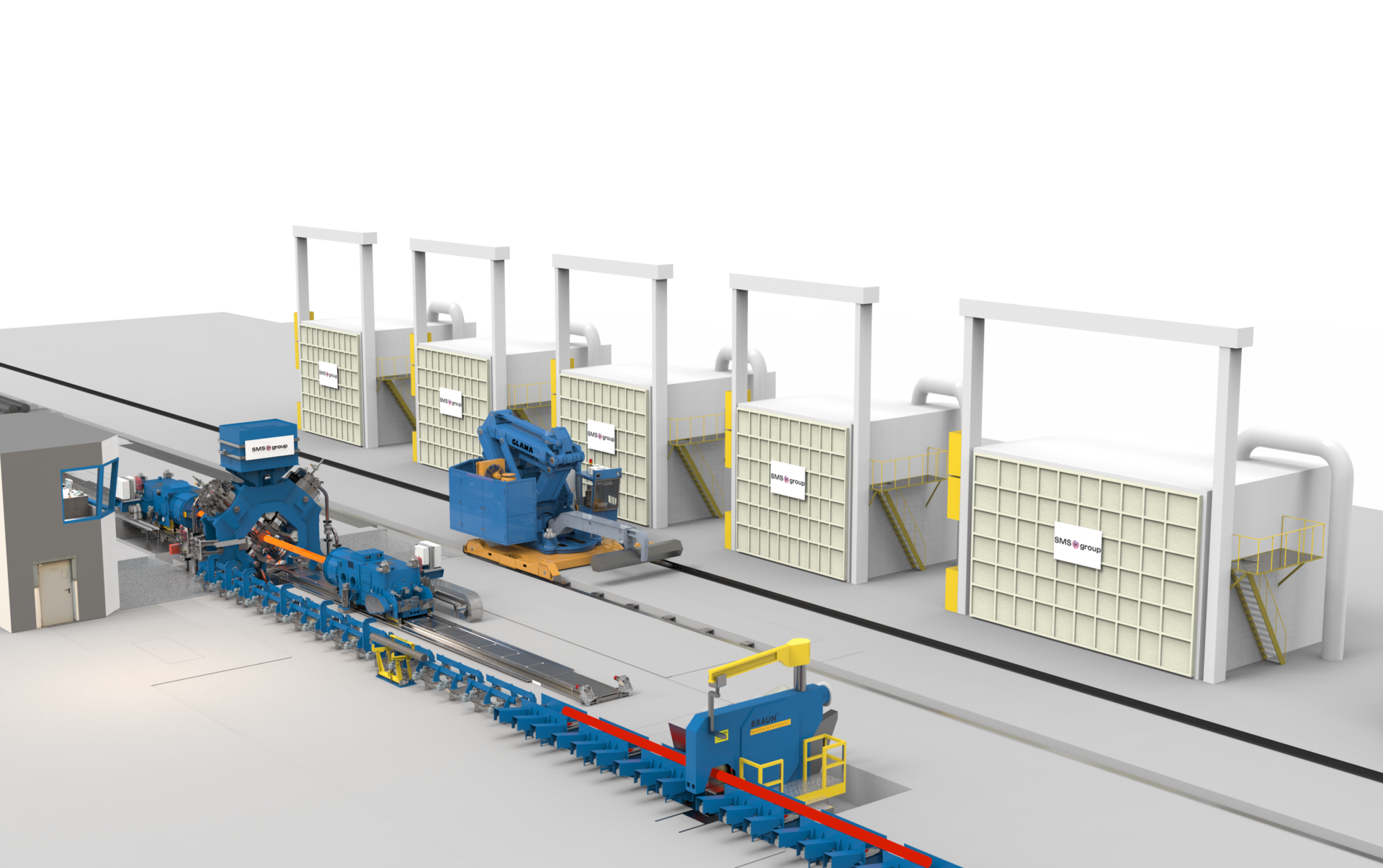
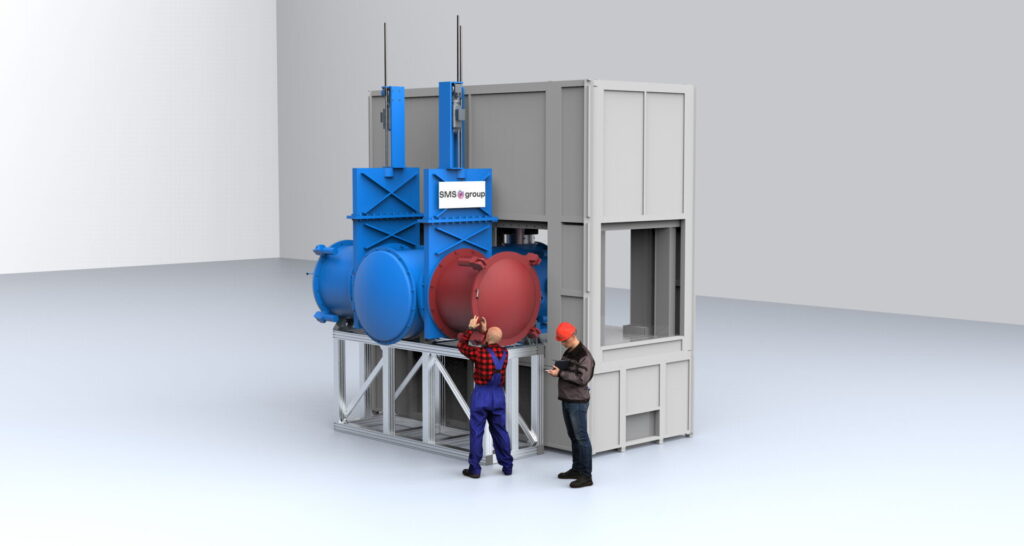
2. Haynes International Inc. has commissioned SMS Group to supply a new hydraulic radial forging line to increase its production of nickel- and cobalt-based alloys, serving markets such as aerospace and chemical processing in the United States. The integrated plant investment, which includes a forging machine, reheating and annealing systems, and automated material handling, is expected to improve production efficiency, metallurgical quality, and responsiveness to global demand while supporting growth in high-performance alloy manufacturing.
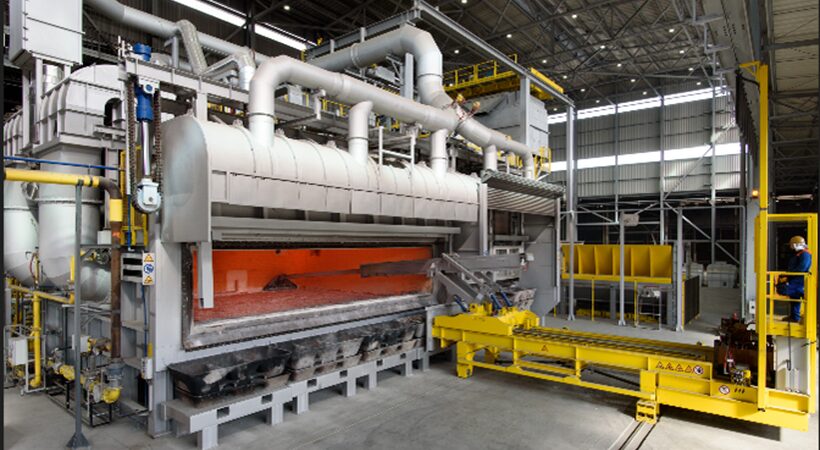
3. Hertwich Engineering GmbH has delivered a customized rolling ingot foundry — including an Ecomelt PS120 preheat-shaft melting furnace, holding furnace, and vertical casting machine — to Remi Claeys Aluminium N.V. The new facility, set to begin operations in spring 2026, will enhance process stability and efficiency for processing contaminated aluminium scrap, strengthening competitiveness and sustainability in the aluminium manufacturing sector.
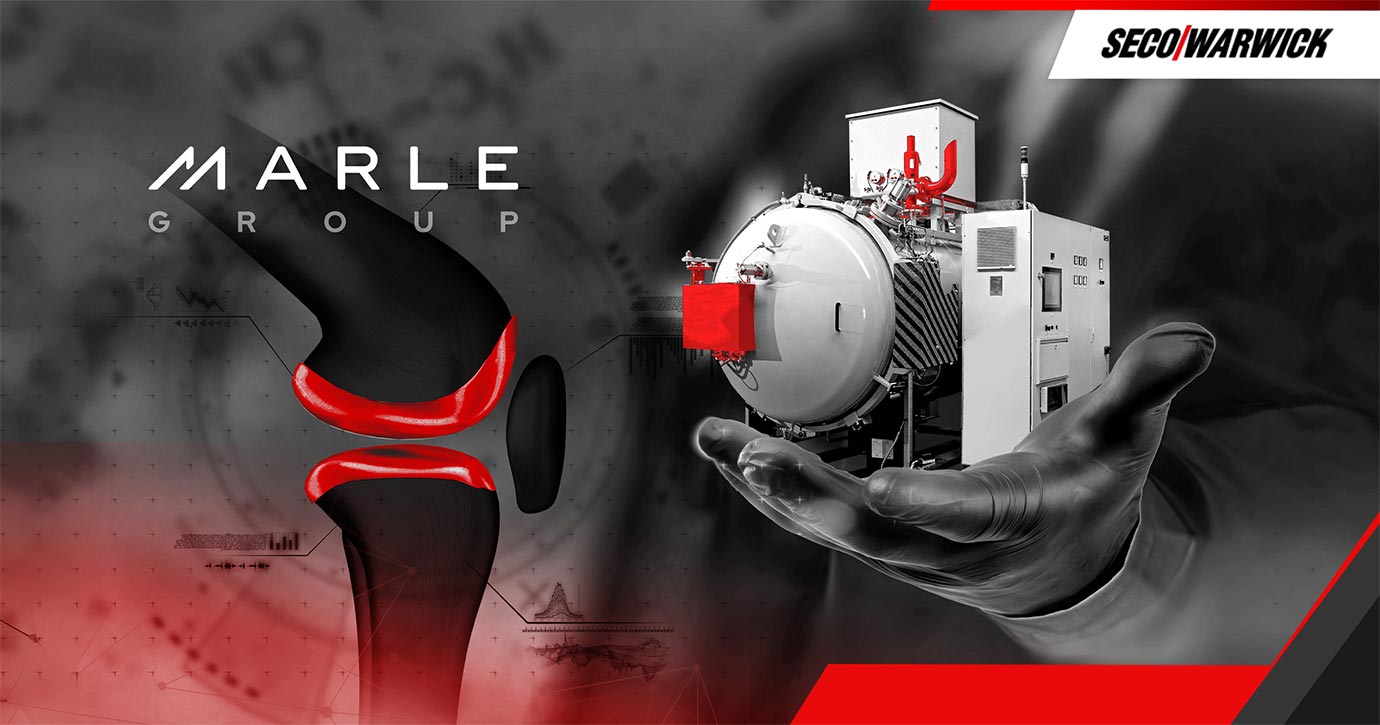
4. Marle Group has purchased and will install an additional vacuum heat treating furnace at its Marle Nowak facility in Pancé, France, expanding in-house capacity for heat treating cobalt-alloy orthopedic implants and surgical instruments. Supplied by SECO/WARWICK, the new furnace responds to the Marle Group’s need for rapid cooling of large loads while supporting efforts to improve production control and delivery times for medical device manufacturing.
5. SMS group is supplying an isothermal forging module to the Institute of Forming Technology and Machines (IFUM) at Leibniz University Hannover to be integrated into their existing press as part of the EU and Lower Saxony-funded “High-performance materials of the future – oWZu” research project. This advanced vacuum forging system will expand research and development of high performance materials for aerospace, medical technology, and industrial applications, accelerating technology transfer and setting new standards in forming reactive superalloys.
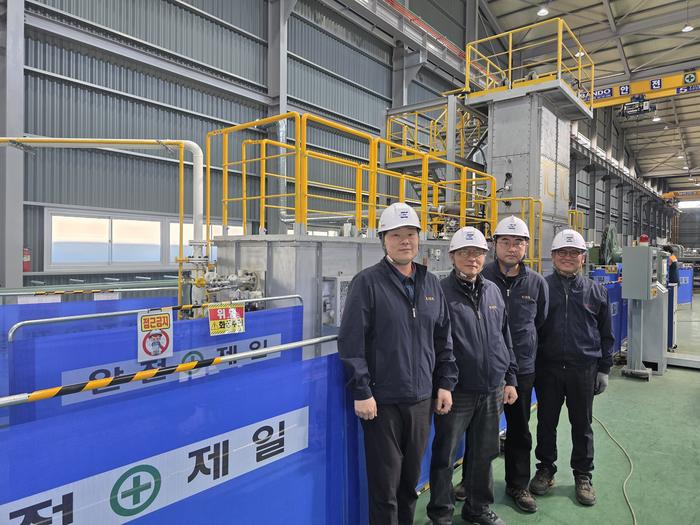
6. Researchers at the Korea Institute of Energy Research (KIER) have developed an electrified heat treatment technology for the annealing stage in galvanized steel strip production that cuts greenhouse gas emissions by over 98% compared with traditional combustion furnaces. The breakthrough replaces fossil fuel burners with electric heating elements while maintaining product quality and productivity, and could significantly reduce equipment costs and support decarbonization in the automotive and appliance steel supply chain. This innovation advances industrial heat treating processes toward carbon-free operation, helping manufacturers meet tightening environmental standards and global decarbonization goals.
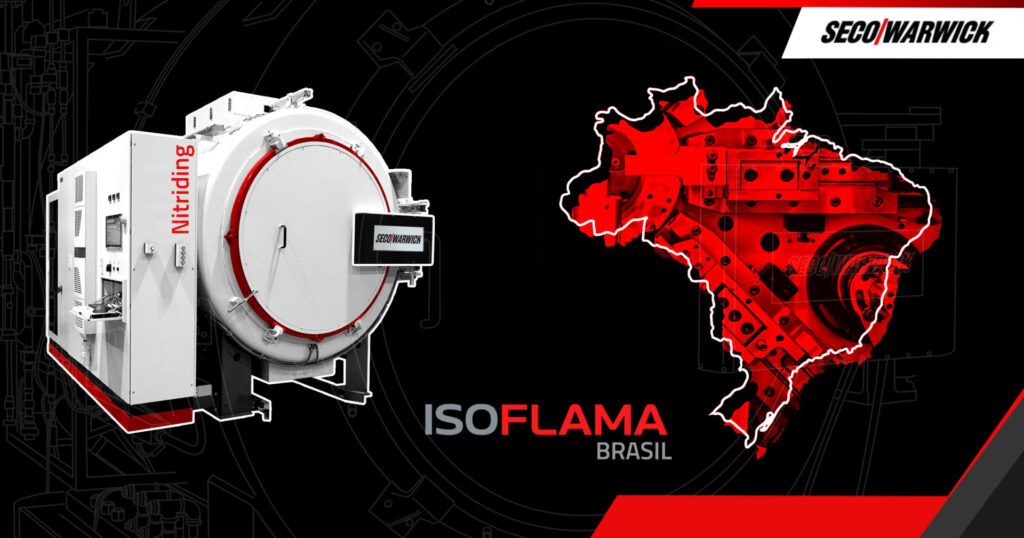
7. SECO/WARWICK has been selected by Brazil’s Isoflama to supply a customized horizontal retort furnace for high-temperature tempering and ZeroFlow nitriding at its heat treatment plant. This new furnace will integrate with Isoflama’s production control system and support processing of large, heavy components, enhancing efficiency and precision to continue serving the automotive, aerospace, and machinery industries in South America.
8. Brugola has implemented CODIAC monitoring technology to ensure reliable tracking and analysis of furnace processes on AICHELIN cast link belt furnaces at its facility. This upgrade enhances real-time oversight of thermal processing parameters, supporting consistent quality and operational efficiency.
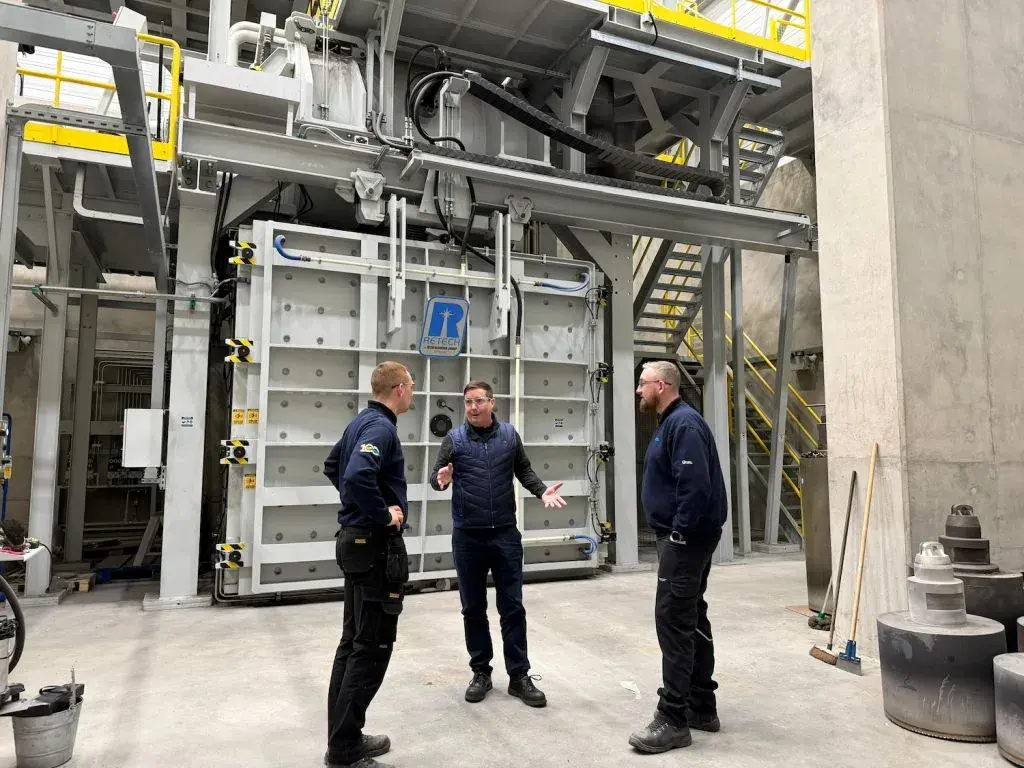
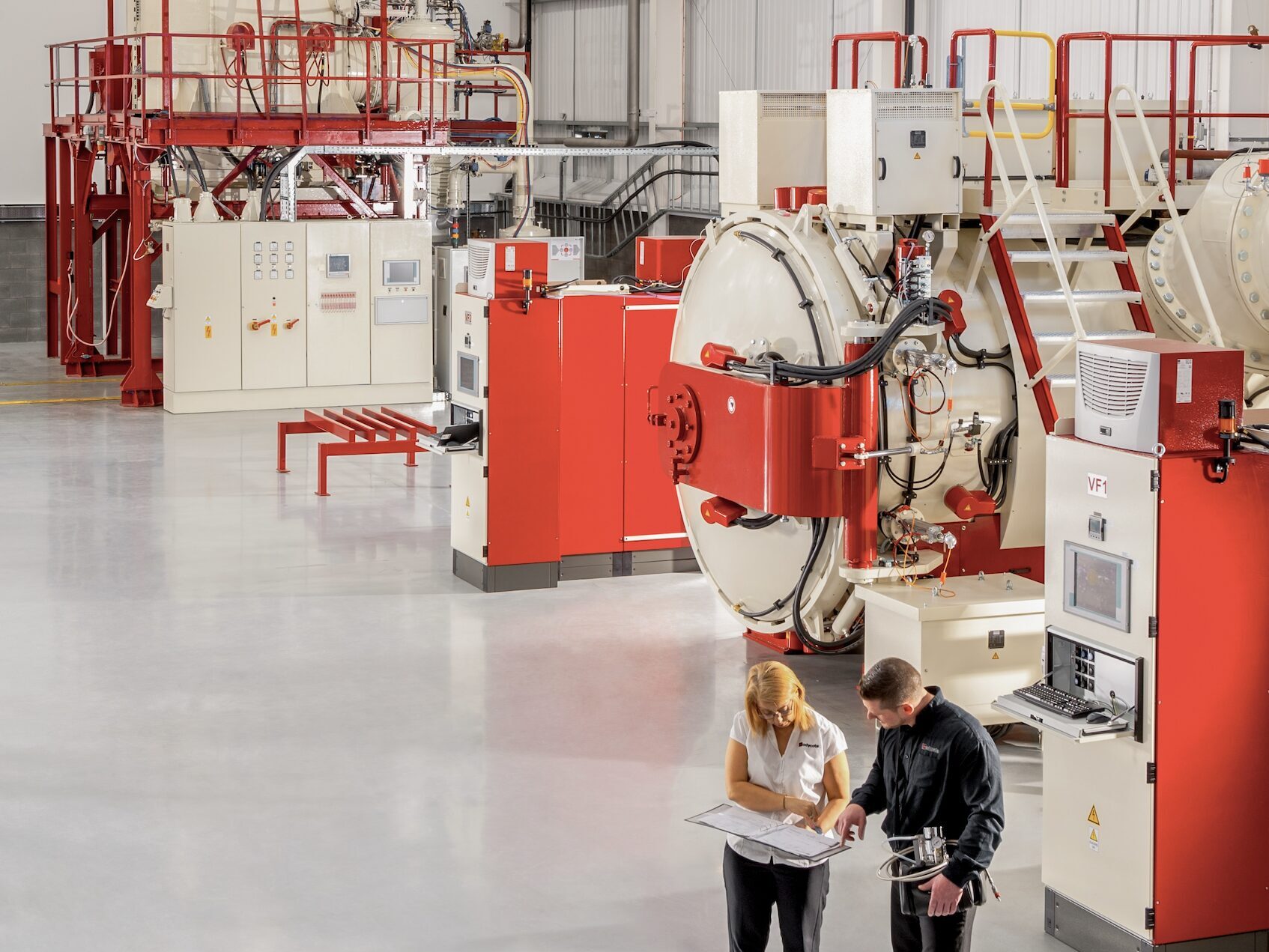
Vacuum furnaces for precision heat treating of bearing components Visualization of a radial forging line from SMS group, similar to the one at Haynes International’s Kokomo site in IndianaMulti-chamber melting furnace of the Ecomelt PS120 type Vacuum furnace delivering cooling solution
3D visualization of the isothermal forging module integrated in the pressKorea Institute of Energy Research teamIsoflama’s horizontal retort furnace provided by SECO/WARWICK
Company & Personnel
9. Hubbard-Hall Inc. has acquired the assets of JSA/Metalline, bringing JSA’s customer-facing team into Hubbard-Hall’s organization to expand sales coverage, technical support, and response times for manufacturers serving the plating and general metal finishing industries across the Upper Midwest/Midwest. The move strengthens regional service capabilities, giving manufacturers more direct access to supplier expertise, streamlined single-source ordering, and stronger technical support for critical surface finishing processes.
10. AECO Corp. has promoted Maryann Remner to president, effective immediately, where she will lead the company and its three operating subsidiaries — Alloy Engineering, Mach3 Machining, and Thermcraft — which serve high-temperature fabrication, precision machining, and thermal processing equipment markets.
11. Castings Technology, a UK manufacturer of titanium and steel castings, has announced the creation of twenty new jobs as it expands capacity to meet growing aerospace demand, reinforcing its role in supplying cast components for the sector.
12. WINGENS CONSULTANTS has appointed Mark Hemsath as Executive Consultant – Heat Treat & Advanced Furnace Specialist. Hemsath brings over 30 years of aerospace heat treating experience, with deep knowledge in vacuum systems, nitriding processes, and advanced furnace technologies.
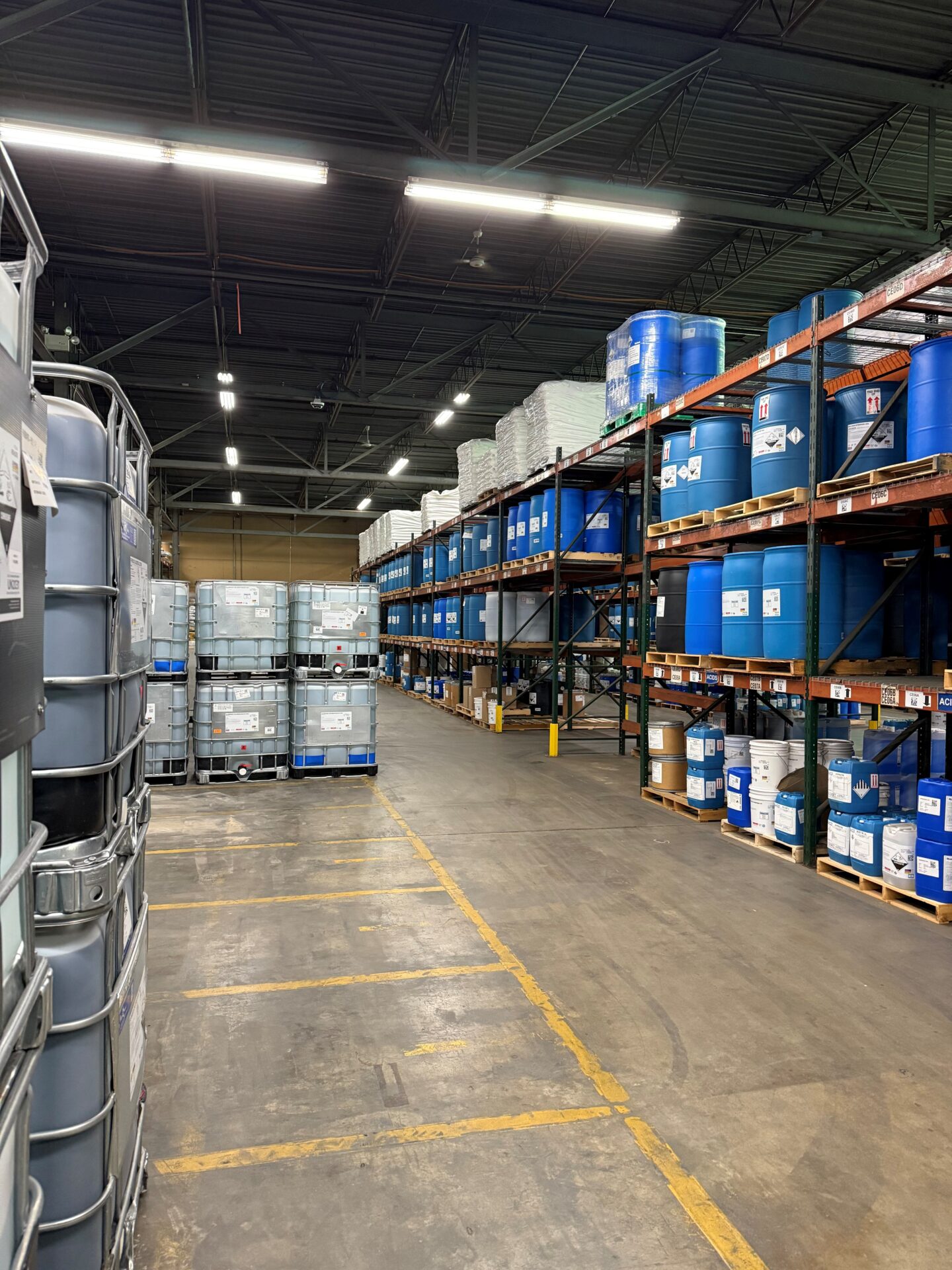
Hubbard-Hall warehouse President of AECO Corp., Maryann RemnerCastings Technology operations in Rotherham recruiting from factory floor to leadershipNewly appointed Executive Consultant – Heat Treat & Advanced Furnace Specialist at WINGENS CONSULTANTS, Mark Hemsath
Kudos
13. Bodycote has achieved independent validation from Bureau Veritas for its proprietary carbon footprint calculator tools covering nine core heat treatment processes, enabling customers to request ISO-assured carbon data for thermal processing methods such as vacuum and low-pressure carburizing. This validation enhances transparency and helps manufacturers measure and compare emissions, supporting the selection of lower-carbon heat treatment options.
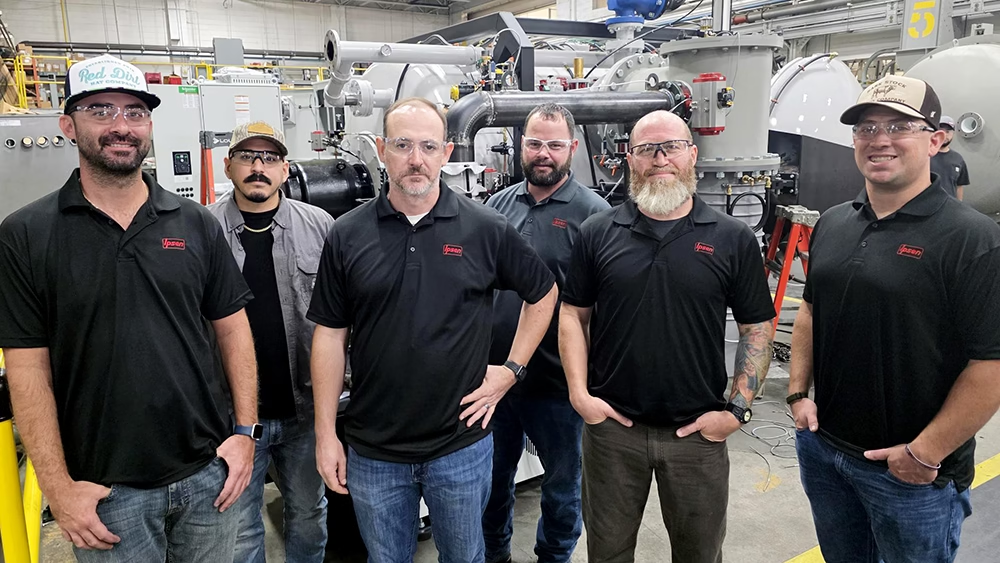
14. Ipsen recognized six service technicians — Todd Jones, Casey Guinn, Craig Monaghan, Eric Gould, Alfredo Mendoza, and Dom Wirthlin — for completing its 14-week Field Service Engineer Academy, an intensive hands-on training program for vacuum furnace specialists combining classroom instruction with mentored field experience.
Bodycote’s validated PCF calculators covering nine key heat treatment processesRecent graduates of Ipsen’s 14-week Field Service Engineer Academy
Heat TreatToday offers News Chatter, a feature highlighting representative moves, transactions, and kudos from around the industry. Enjoy these 10 news items.
Equipment
Aichelin recently delivered a vacuum furnace to Bodycote‘s heat treatment and specialist thermal processing plant in Vantaa (Finland). The furnace with a usable space of 600 x 900 x 600 mm and a maximum batch weight of 1,000 kg was tailored to the company’s requirements. In this collaboration between the two companies, Bodycote has selected Aichelin to supply equipment that aligns with its vision for advanced and sustainable vacuum technology for industrial heat treatment.
Two electrically heated two-zone curing conveyor ovens with cool-down sections have expanded the operations of an industrial manufacturer. The ovens, supplied by Wisconsin Oven Corporation, will be used for curing adhesive material between parts.
Gruenberg announced the shipment of an industrial electrically heated cabinet oven to a company that manufactures products for the medical device industry. The furnace will be used for curing material used in the products.
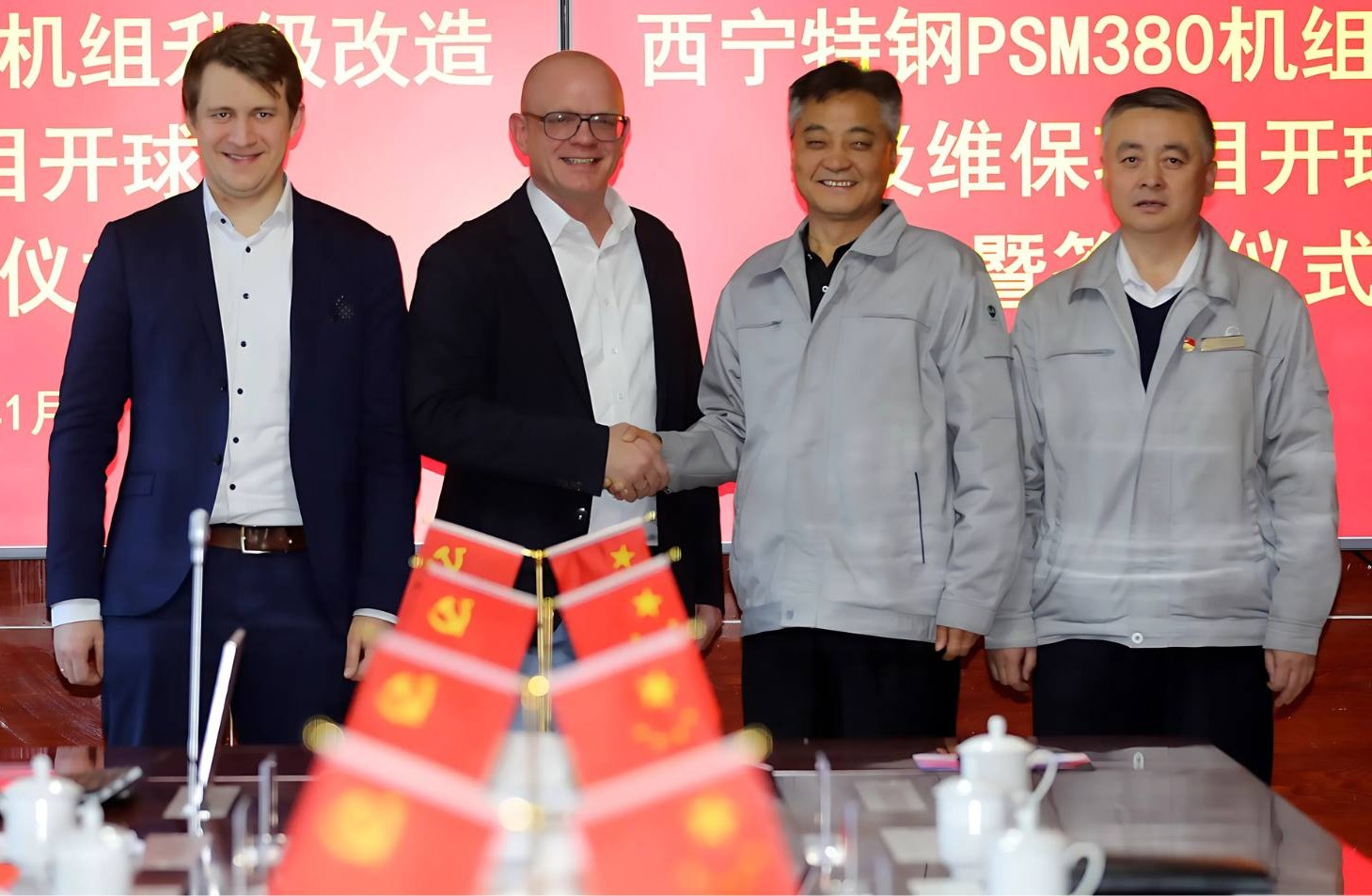
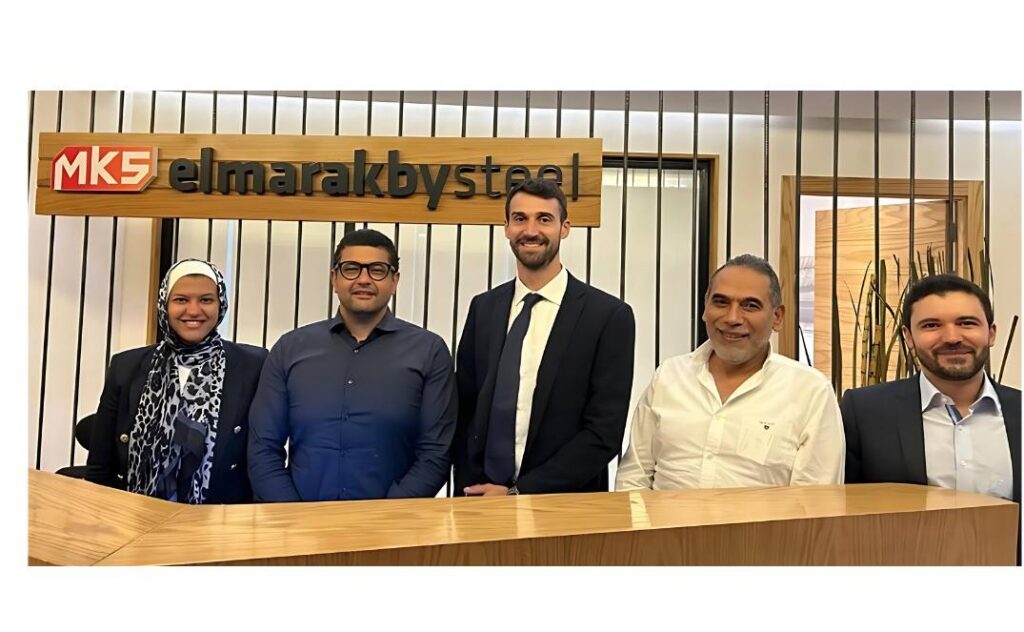
Qinghai Xigang New Materials Co., Ltd., a subsidiary of Xining Special Steel, has signed a contract with SMS group for a PSM380 mill upgrade and technical outsourcing services. The transaction comprises a comprehensive upgrade and related maintenance services for the PSM380 (Precision Sizing Mill) mill used to roll special steel bars and is aimed at enhancing the mill’s production efficiency and product quality. In additional news: Kardemir Karabük Demir Çelik Sanayi ve Ticaret A.Ş has acquired a five-strand combi-continuous caster from SMS Concast, a company of SMS group, to upgrade production capabilities at its its integrated steel plant at the Karabük site in Türkiye. El Marakby Steel, an Egyptian manufacturer of deformed bars and wire rod, is increasing production capacity by contracting SMS to upgrade the existing SMS minimill at its 6th of October site. Baosteel Desheng Stainless Steel Co., Ltd., a subsidiary of China Baowu Steel Group, announces the completion of a vacuum oxygen decarburization (VOD) plant by SMS group. The VOD system represents a crucial component of the steel producer’s strategic expansion, designed to enhance the facility’s capacity for producing specialty steels by employing secondary metallurgical processes. SMS group has also completed the automation system upgrade of hot strip mill no. 1 at PT Krakatau Steel (Persero),Tbk. (PTKS) in Cilegon, Indonesia.
Vacuum furnace delivered to Bodycote’s heat treatment and specialist thermal processing plant by Aichelin Cooling groups operating as part of the laminar cooling system for ColakoLow-carbon extrusion ingot for the European construction and automotive industries produced at HusnesQinghai Xigang New Materials Co., Ltd., with PSM380 mill upgrade and technical outsourcing servicesA five-strand combi-continuous caster at Kardemir Karabük Demir Çelik Sanayi ve Ticaret A.Ş acquired from SMS ConcastEl Marakby Steel production capacity increased with upgrade at existing SMS minimill Vacuum oxygen decarburization (VOD) plant at Baosteel Desheng Stainless Steel Co., Ltd., completedAutomation system of hot strip mill no. 1 upgraded at PT Krakatau Steel (Persero)
Company & Personnel
Ipsen has announced the promotion of Evan Hundley to retrofits manager and the appointment of Lu Chouraki as field service manager. As retrofits manager, Hundley will lead the Retrofits Team to improve response times, streamline pricing and proposals, and provide tailored solutions that extend equipment lifespan and efficiency. As field service manager, Chouraki will oversee all regional service managers and field service engineers, focusing on streamlining processes, improving response times, and enhancing customer support. He will also drive the continued expansion of the company’s HUBs and develop his team into subject matter experts.
Steve Sparkowich has been appointed as the new chief commercial officer (CCO) at Titan International Inc., a manufacturer and recycler of specialty metal products based in Pottstown, Pennsylvania, effective immediately. In his new role as CCO, Steve will oversee the company’s commercial strategy, drive business development, and strengthen relationships with key clients across industries such as aerospace, automotive, energy, semiconductor, and defense.
Thomas Wingens, founder and president of WINGENS CONSULTANTS and an internationally recognized expert in the thermal processing and metallurgy industry, has been named an advisor to the Center for Heat Treating Excellence (CHTE) at Worcester Polytechnic Institute (WPI). As industrial advisor to CHTE, Thomas will provide strategic guidance in business development and assist with CHTE’s project research portfolio.
IperionX Limited has announced the appointment of Tony Tripeny as non-executive director and current IperionX non-executive director Lorraine Martin as lead independent director. Mr. Tripeny currently serves as a director at Mesa Laboratories and Origin Materials. Currently serving as president and CEO of the National Safety Council, Ms. Martin is also a director at Kennametal, a global materials science firm.
Evan Hundley Retrofits Manager Ipsen USALu Chouraki Field Service Manager Ipsen USASteve Sparkowich Chief Commercial Officer (CCO) Titan International IncThomas Wingens President Wingens Consultants Industrial Advisor Center for Heat Treating Excellence (CHTE)
Kudos
Advanced Heat Treat Corp recognizes the AHT Michigan team members who have completed professional training and earned new certifications: Chad Clark for Practical Approach to Supply Chain Management, Tom Broman for Supervisor Skills 1.0 and 2.0, Jeff Machincinski for Introduction to Pyrometery, and Jesse Hyder for Practical Interpretation of Microstructures.
The OTTO JUNKER Academy has offered a professional training program regarding planning, modernization, operation, repair and maintenance of industrial furnaces for over 10 years. Since 2014, the instruction covers induction melting and heat treatment of metal as well as universal subjects such as economic and energy efficiency.
Chad Clark Advanced Heat Treat CorpTom Broman Advanced Heat Treat CorpJeff Machincinski Advanced Heat Treat CorpJesse Hyder Advanced Heat Treat Corp OTTO JUNKER Academy professional training program
Industry experts agree: 2025 is a year of significant, high-tech developments. In this Technical Tuesday, hear from three heat treat industry consultants on current and incoming technological advances, from miniaturization and customization to artificial intelligence.
Michael Mouilleseaux, general manager at Erie Steel, Ltd, opens the discussion by asking what role AI has in a perfect world of heat treating; Thomas Wingens, president of Wingens Consultants, predicts six major technologies to look for in 2025; and Dan Herring, a.k.a. The Heat Treat Doctor® and owner of The HERRING GROUP, Inc., points out how the trend toward smaller is affecting the heat treat industry.
This informative piece was first released inHeat Treat Today’sJanuary 2025 Technologies To Watch in Heat Treating print edition.
AI’s Place in Heat Treating?
by Michael Mouilleseaux
The benefits of AI are purported to be the ability to reduce the time required to complete complex tasks, such as data analysis, while reducing human error and providing both unbiased decision making and data-driven system enhancements … and by the way, it can operate 24/7 without breaks!
Does AI have a place in heat treating?
Here’s what I would want my heat treat AI (HT AI) to be able to do with a gas-fired atmosphere furnace.
Combustion System:
My HT AI will continuously monitor the free oxygen of all the burners and keep them at a perfect ratio, thereby optimizing performance and gas consumption. It will track these changes and provide analysis of any trends that it “perceives,” so to speak.
My HT AI will continuously monitor combustion air pressure and message me in time to have the air filters changed before it affects performance. It will track this and provide historical and prescriptive information.
My HT AI will periodically perform a “tube check,” whereby it will shut off combustion in a tube and monitor the free oxygen, recognizing that any diminishment from “atmospheric” O2 levels indicate the potential of a tube leak. It will track this and provide analysis of any trends that it perceives.
My HT AI will track when system thermal stasis is achieved, monitor gas consumption for each discrete heat treat cycle, provide analysis of trends that it perceives, and recommend thermal cycle changes to optimize these cycles.
My HT AI will facilitate the optimization of the critical human assets in process engineering, product quality and equipment maintenance.”
Michael Mouilleseaux
Atmosphere Control System:
My HT AI will continuously monitor the atmosphere flows required to achieve the requirements for each heat treat cycle. It will track “atmosphere recovery” and provide analysis of any trends that it perceives (i.e., increased usage as a precursor to a furnace leak).
My HT AI will periodically perform a furnace check, whereby it compares the composition of the Endo gas in the furnace to that exiting the generator, providing a measure of furnace integrity. It will track this and provide analysis of any trends that it perceives.
My HT AI will confirm “tube check” data (see above) with atmosphere usage to evaluate its potential effects on process integrity and make actionable recommendations. It will track these incidents and provide analysis of any trends that it perceives.
My HT AI will provide assurance of system performance and actionable information.
Shoot for the Moon:
My HT AI will have the unique ability to integrate metallurgical results with process information and thereby provide the ability to optimize the heat treating process AND metallurgical results.
My HT AI will allow me to input material chemical and hardenability data and, by comparing actual results with the calculated, or prospective results, provide confirmation of the thermal and quenching segments of the process.
My HT AI will be able to correlate IGO results with furnace integrity checks (i.e., leaks) and over time establish hard limits for allowable leak rates.
My HT AI will be able to correlate actual retained austenite levels in carburized case with furnace carbon potential and make data-driven process modifications to optimize this.
My HT AI will be able to correlate the shape of the case depth curve with the carburizing cycle and the material type, and it will make data-driven process modifications to optimize this.
My HT AI will have the ability to develop new heat treat thermal cycles specific to my furnaces extrapolated from existing data.
My HT AI will provide a level of system performance heretofore not achieved, that not only assures adherence to established standards but provides a clear path of continuous improvement via data analysis and actionable actions. Product results will be validated by total process control, and total process control will assure attainment of product results.
My HT AI will facilitate the optimization of the critical human assets in process engineering, product quality and equipment maintenance.
In short, my HT AI will afford the heat treating community the ability to finally jettison the mantle of “black art” and join the community of high-tech engineered processes.
About the Author:
Michael Mouilleseaux General Manager Erie Steel, Ltd
Michael Mouilleseaux has been at Erie Steel in Toledo, OH, since 2006 with previous metallurgical experience at New Process Gear in Syracuse, NY, and as the director of Technology in Marketing at FPM Heat Treating LLC in Elk Grove, IL. Having graduated from the University of Michigan with a degree in Metallurgical Engineering, Michael has proved his expertise in the field of heat treat, co-presenting at the 2019 Heat Treat show and currently serving on the Board of Trustees at the Metal Treating Institute.
2025 will be the year of invention and application. There are six major technologies to be looking out for: AI management software, giga casting for the EV industry, high-pressure quench furnaces, thermal processing specialty materials, processing for steel enrichment, and practices for cleaning consistency.
AI Management Software
Some new heat treat shop management software is now available. It utilizes artificial intelligence to save labor while documenting all processes in real time. The software easily adapts to the way we work and is much easier to learn and implement than the software of the past. I see this as the number one investment item for commercial heat treaters in 2025, as it is the cheapest and easiest way to automate with a great ROI while increasing quality and customer service.
Giga Casting
With Tesla as the main driver, very large so-called “GIGA” H13 aluminum dies of 3 to 8-ton weight have really taken off in the last years, in particular for new electric car models, and the demand for very high pressure quench furnaces is increasing in the U.S. (more to come in a later article).
Vacuum Oil Quenching
However, even with the most advanced designs and high-pressure efforts, gas quenching with nitrogen has its limits, and the use of helium is not considered anymore because of its immense cost, even with a recycling system in place. Vacuum oil quenching has become a viable alternative in recent years not only in combination with LPC (low-pressure carburizing) but also with the use of materials like AISI 52100 that would be typically heat treated in atmosphere integral quench furnaces but show lesser distortion with the variation of pressures over the oil bath, which can shift the oil boiling phase peak to lower temperatures (e.g., from 650°C (1200°F) at atmospheric pressure to 400°C (750°F) at 1 mbar pressure). Some new modern vacuum oil quench furnace designs have recently entered the market, showing excellent surface cleanliness and distortion results. Aside from the better quality, they offer a much safer, cleaner and more pleasant work environment.
Specialty Materials
In general, we see a higher demand for the thermal processing of specialty materials; for example this is seen with the hydrogen decrepitation of titanium, tantalum, niobium, or rare earth element materials, powder processing or sinter processes, and surface diffusion processes.
Steel Enrichment
Enriching stainless steel with nitrogen is not new, but it is gaining momentum and more applications. One method for\ low-temperature processes on austenitic stainless steels around 370°C (690°F) is called S-phase case hardening, and the high temperature version around 1100°C (2010°F) is called solution nitriding. Both processes were initially established in the early 90s in Europe but seem to be gaining momentum and more comprehensive applications worldwide over the last years.
Figure 1. For 2025, “We see more fully enclosed vacuum solvent cleaning in heat treat shops to ensure a higher standard and consistency of the surface cleaning results compared to the fading of water cleaners.” – Thomas Wingens, WINGENS CONSULTANTS
Cleaning Consistency
Speaking of surface processes: The cleaning of components has been a thankless process, especially in commercial heat treatment, as it is seen as a necessity that is not necessarily paid for by the clients but is necessary to have uniform dissociation on the surface of a part to ensure a uniform case (e.g., nitriding case). There are well-defined standards for temperature uniformity and hardness testing, but cleaning consistency needs to be addressed, as it can be very impactful. We see more fully enclosed vacuum solvent cleaning in heat treat shops to ensure a higher standard and consistency of the surface cleaning results compared to the fading of water cleaners.
About the Author:
Thomas Wingens President WINGENS CONSULTANTS
Thomas Wingens has been an independent consultant to the heat treat industry for nearly 15 years and has been involved in the heat treat industry for over 35 years. Throughout his career, he has held various positions, including business developer, management, and executive roles for companies in Europe and the United States, including Bodycote, Ipsen, SECO/WARWICK, Tenova, and IHI-Group.
Everywhere we turn today, the products we use are getting smaller, more compact and more powerful. This is true across all industries, from aerospace to automotive, from medical to electronics, and from energy to semiconductors to name a few. Today, miniaturization, portability and customization have become major design objectives for almost all manufacturing segments.
These trends are irreversible and are, or will be, found even in the most unlikely of places — both in mining of resources taking place deep under the ocean floor and eventually on other planets. The key question then becomes, how will all of this influence our heat treating operations?
Miniaturization, Portability and Customization Today
Given the ever-increasing demand for higher performance in a smaller footprint, we have often focused our energies on taking existing products and adapting them for use. But in the long term, this is not sustainable. For example, not only is gear noise reduction critical in our submarines, but the medical and robotics markets are continuously searching for smaller, more efficient, more application specific and more intelligent drive systems and motors with increased torque density.
Heat treatment will experience a metamorphosis and emerge more broadly as thermal treatment. The age of metals as we have known it has become the age of materials: ceramics, composites, powder materials, glasses, polymers, fiber-reinforced plastics, and even nanomaterials.
Dan Herring, The Heat Treat Doctor®
Another example, although not new, is miniaturization in vehicle electronics, especially as it relates to data collection where demand is high for smaller, more powerful and, yes, cheaper components. Integration into the electronic control units via on-board power systems has seen the need for more cables in vehicles and positioning connectors, which means more contacts/connections on the electronic components without significantly increasing the installation space.
Similarly, there is a huge demand for portability. This is true not only in our electronics (just think about how cell phones or computers have changed over the last ten years), but there is a growing need for portable medical devices so that medical care can be brought to the patient rather than the other way around. For example, longer battery life and lighter weight are critical for devices such as portable oxygen concentrators.
What Does This Mean for the Heat Treatment Industry?
Looking ahead, we will see both short and long-term changes to our industry. Happening today and continuing in the near term, heat treaters are working closer than ever with design and manufacturing engineers as they focus on products that reduce environmental impact, are produced at lower unit cost, and with improved part quality. Still, the era of mass recalls must come to an end. And the cost of heat treating is less than it was even a decade ago. But as manufacturing demand evolves due to consumer expectation, process and equipment flexibility will become keys to meeting the highest quality standards in an on-demand world.
Historically, changes in the heat treat industry has been evolutionary and incremental in both nature and effect. There have been notable exceptions such as the invention of the oxygen probe or low pressure vacuum carburizing. But to meet the manufacturing demands of the future, change will need to be more revolutionary and abrupt in nature, a game changer.
Given the ever-increasing demand for higher performance in a smaller footprint, we have often focused our energies on taking existing products and adapting them for use. But in the long term, this is not sustainable. For example, not only is gear noise reduction critical in our submarines, but the medical and robotics markets are continuously searching for smaller, more efficient, more application specific and more-intelligent drive systems and motors with increased torque density.
Dan Herring, The HERRING GROUP, Inc.
Heat treatment will experience a metamorphosis and emerge more broadly as thermal treatment. The age of metals as we have known it has become the age of materials: ceramics, composites, powder materials, glasses, polymers, fiber-reinforced plastics, and even nanomaterials. As a result, we will find ourselves needing, for example, to expand our heat treat capability and equipment to deal with such items as process temperature ranges from -200°C to 1850°C (-330°F to 3360°F) or greater or at pressure/vacuum levels heretofore only achievable in laboratories or specialty applications.
As product sizes decrease, load sizes will become smaller out of necessity. And as a result, our heat treat equipment must be small lot capable with tighter controls to achieve higher quality along with tremendous process flexibility.
Final Thoughts
History’s enduring legacy is that change is inevitable. Just think back to how the heat treatment industry has evolved, from the campfire to the blacksmith to the modern heat treater, from the artisan to the era of mass production, from the art of heat treating to the science of heat treatment. The lesson is that to adapt, one must constantly innovate and invent. Miniaturization, portability and customization in whatever form they take are here to stay. Perhaps even teleportation (the ultimate miniaturization?) isn’t that far off after all, considering flight was unheard of a little over a century ago.
About the Author:
Dan Herring (The Heat Treat Doctor®) The HERRING GROUP, Inc.
Dan Herring has been in the industry for over 50 years and has gained vast experience in fields that include materials science, engineering, metallurgy, new product research, and many other areas. He is the author of six books and over 700 technical articles.