


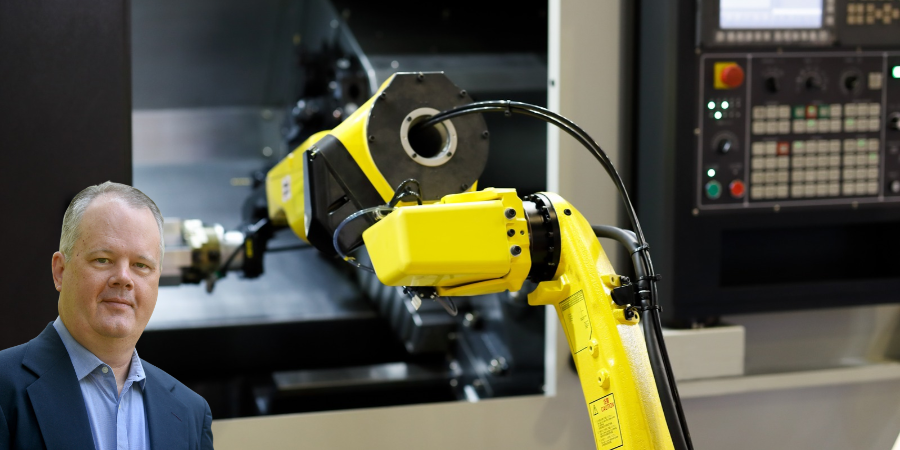

Heat Treat Today publishes twelve print magazines a year and included in each is a letter from the editor. This letter is from the October 2026 Ferrous & Nonferrous Heat Treatments/Mill Processing print edition. In today’s letter, Rick Green, managing editor at Heat Treat Today, shares his insights on what heat treaters can learn from Amazon’s use of robotics, computer vision, and digital-twin simulation, drawn from an executive seminar hosted by WINGENS CONSULTANTS and Heat Treat Today. He explains why automation doesn’t have to be an all-or-nothing gamble, and why picking the low-hanging fruit and testing virtually or at a limited scale may be the smartest way to learn quickly and avoid expensive mistakes.
I’m still trying to get my head around everything Amazon is doing with robotics and warehouse technology. But even from the outside, the scale of it is remarkable.
And Amazon’s scale has stuck with me for weeks after WINGENS CONSULTANTS and Heat Treat Today brought together heat treat leaders and experts in robotics and artificial intelligence for an executive seminar near Pittsburgh.
After spending a full day of ideas and insights, you might be surprised what heat treating workers can learn from an Amazon warehouse. Amazon’s engineering leaders are using advanced computer vision and digital-twin technology to help machines understand what is happening in a warehouse, move materials through complicated processes, and identify bottlenecks before they become expensive problems.
Pushing Boundaries
The speed, size, and breadth of Amazon’s embrace of technology is quite amazing. Simply put, they are pushing boundaries.
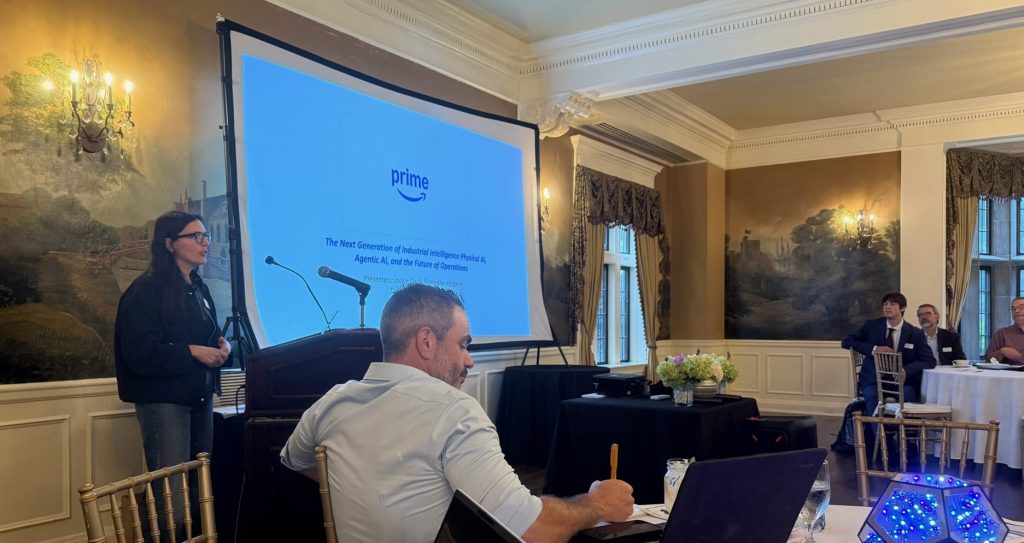
Jacqueline Cook and Sumedha Katarya from Amazon Global Engineering offered a compelling view of what the future of warehouse technology looks like during their session, “The AI Future of Warehouse Technology and Amazon Robotics”: highly automated, digitally modeled, and increasingly intelligent. Amazon is automating extraordinarily complex material-handling processes while identifying and eliminating costly bottlenecks across its fulfillment network.
What caught my attention is that these ideas don’t seem limited to huge fulfillment centers. I could see where the same basic approach could have some very practical applications in heat treating operations. For example, shops could use automation to handle parts in high hazard areas or create a virtual version of a furnace workflow and test it before spending money on new equipment or making major changes on the plant floor.
The overall direction of using AI seems clear: companies are gaining the ability to model a process, find problems, and try different solutions before making physical changes. That could make automation less of a gamble.
Amazon is pushing automation into areas that would have seemed unrealistic not long ago. While most heat treat shops obviously aren’t going to operate like Amazon, there may be useful lessons in the way Amazon is combining robotics, computer vision, simulation, and data.
Low-Hanging Fruit
A company doesn’t have to overhaul its entire process overnight to see the benefit of AI or robotics. As one seminar attendee said, “Just pick the low-hanging fruit and take the win. You can build from there.”
Just as interesting is Amazon’s willingness to move on when something doesn’t work. The company seems comfortable testing an idea, learning from it, and abandoning it when the results don’t justify continuing. That may be one of the less obvious advantages of working at that scale. Amazon can try new approaches or technology, see what delivers value, and focus its resources on the approaches that do.
It seems to me that there’s a lesson in that for manufacturers, too. Automation doesn’t have to be an all-or-nothing decision. In some cases, the smarter approach might be to test a process virtually or on a limited scale, learn what works, and move on quickly when it doesn’t.
One final takeaway: You don’t have to be Amazon to borrow some of the playbook. The goal isn’t to make every experiment work. It’s to learn quickly, avoid expensive mistakes, and spend money on the solutions that actually improve the operation.
Since technology is changing so rapidly, WINGENS and Heat Treat Today are bringing the seminar back next year. I already have it on my calendar (tentatively set for August 27, 2027). There will be much more to talk about then. I’m looking forward to it.
Going Off Topic
This October issue marks my second month as managing editor of Heat Treat Today and features my first column. By the time you read this, I will have attended Heat Treat Boot Camp and will be preparing for Furnaces North America — two opportunities I’m looking forward to as I continue getting to know this industry and the people who make it what it is.
One of the things that has stood out most during my short time here is how welcoming and generous everyone has been with their time and knowledge. People have been remarkably open about explaining their work, sharing their experiences, and offering insight into their challenges and opportunities. That willingness to connect has made stepping into this new role both exciting and encouraging.
If you’re attending FNA in Indy, please look me up. I’d be happy to introduce myself, hear about your work, and learn more about your experience. I’m still a newcomer, but I’m eager to learn as much as I can.
So, whether you have a story to tell, a topic you’d like to see covered, or simply an opinion to share, I hope you’ll get in touch. I’m looking forward to meeting more of you and beginning this conversation.

Managing Editor
Heat Treat Today
Contact: Rick Green at rick@heattreattoday.com