

Tiffany@heattreattoday.com

How 3D Printing Coils Exceeded R&D Expectations

In this Technical Tuesday installment, Josh Tucker, manager of Induction Heating, Tucker Induction Systems, Inc., relates new research conducted on the strength of coils which have been produced through 3D printing.

This informative piece was first released in Heat Treat Today’s April 2025 Induction Heating & Melting print edition.

To read the article in Spanish, click here.


Research on 3D printing induction coils finds that coils are stronger and have a longer life when compared to traditionally manufactured coils. Read about how additive manufacturing removes steps like brazing the joints and provides new design capabilities. 

Tucker Induction Systems began exploring the possibility of using 3D printing technology to manufacture coils and found that, in many cases, 3D printed coils were stronger and longer lasting than traditionally manufactured counterparts. 

The quest to develop 3D printed coils began in 2020. When COVID-19 hit, Macomb County, Michigan, started an initiative called Project DIAMOnD, which stands for Distributed, Independent, Agile Manufacturing on Demand. It provided small-to-medium-sized area manufacturers with Markforged Fused Deposition Modeling-style 3D printers as both a way to quickly manufacture much needed personal protective equipment for the pandemic and to help small-to-mid-sized manufacturers overcome the supply chain issues that plagued industry during the crisis. 

We were eager to gain hands-on additive manufacturing experience through the DIAMOnD initiative and, in doing so, found that it sparked our curiosity about the possibility of 3D printing our coils and new ways to design them that go beyond the capabilities of traditional machining. 

In 2021, we began a two-year research and development process of printing coils and discovered that by 3D printing induction coils we were able to drastically increase the strength of the coils and potentially lengthen the useful life of the coil. The experience has opened new realms in designing our coils, as well as giving us the ability to design coils using methods that go beyond the capabilities of traditional machining. 

It is common industry knowledge that the weakest parts of a coil are the braze joints, but through the R&D process, we have learned that by 3D printing the coils, it is possible to eliminate most, if not all, braze joints in the head of a coil. This increases the strength and, potentially, the life of a coil. After years of testing and evolving, the end results were better than we expected, proving that the coils can be printed and will last in the field. 
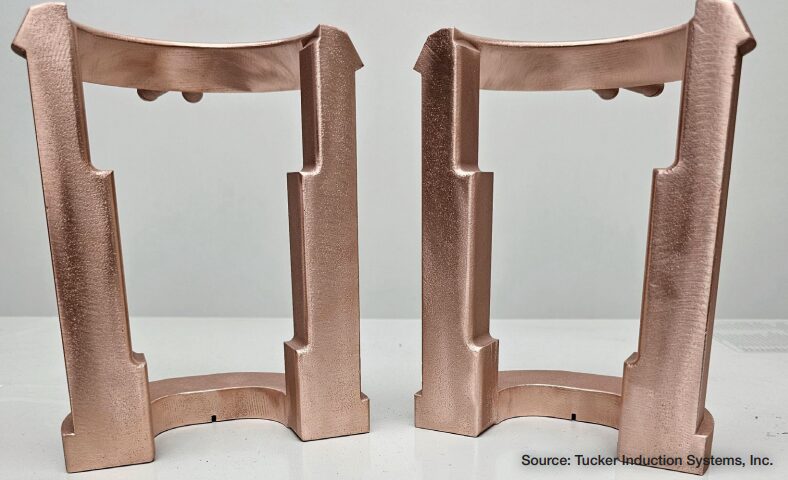
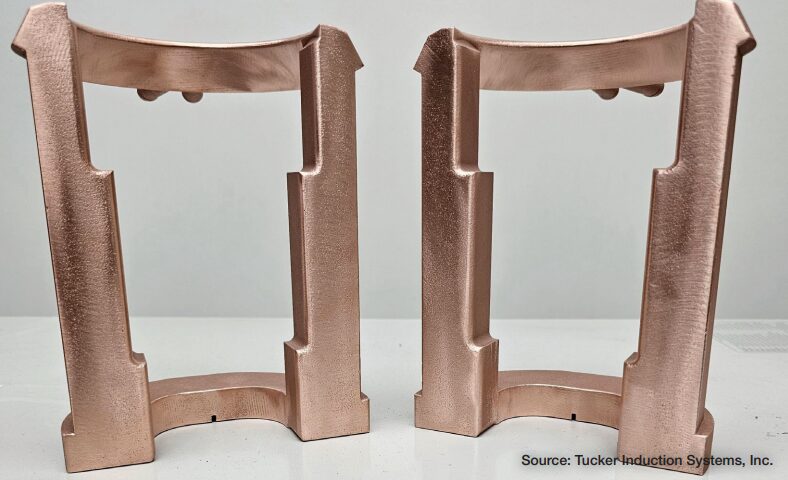
Figure 1. 3D printed single-shot hardening induction coil heads

However, there were some challenges in adapting to using 3D printing technology. For example, the type of copper printing we required was not being done in the United States, which was an obstacle in trying to form a process that resulted in a successfully printed coil. But one of the biggest challenges after we locked down the process and material was in designing the internal cooling passages for the coils. The passages needed to be designed in a way that was self-supporting and non-restricting. We had to produce the same flow rate as traditionally made coils and ensure we were driving the cooling into the right areas. Figuring that out took many failed attempts — learning opportunities — before achieving success. 

Once that goal was achieved, we installed a metal 3D printer at Tucker Induction in January 2024 and have been successfully printing all different types of coils. Some examples include two turn ID, spindle, single-shot, and scanning coils. 

The Benefits of Using 3D Printed Coils 

While traditional coils (such as our interchangeable, quick-change coil for two-turn induction systems and single-shot designs with accurate clamping pressure) have changed the industry, the additional capability of 3D printing allows us to print dimensionally accurate, durable parts that are capable of performing in the field and that can go beyond the barriers of traditional machining. 
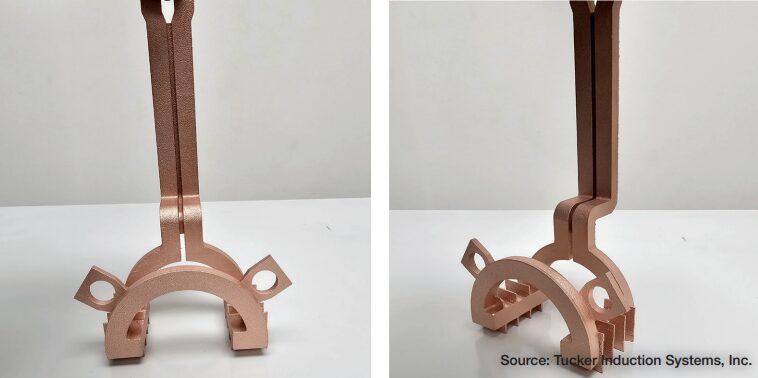
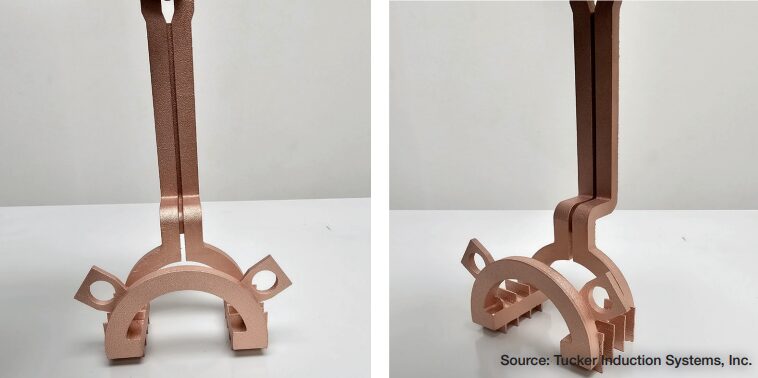
Figure 2. 3D printed single-shot induction coil with keepers

3D printed coils bring several worthwhile benefits to the table including time savings, longevity, and faster coil repair. Time savings is one of the biggest advantages. Because the 3D printer can run “lights out,” the processing time from the printer to the client is far shorter when compared to traditionally fabricated coils. We refer to the processing time as the additional time needed to complete the coil assembly after printing. In some situations, it is possible to print a completed coil assembly with the coil immediately ready to be sent to the client. Other times, additional brazing or supplemental details may be required to complete the assembly. 

Since all coils are different, the processing time varies from coil to coil. However, by printing as much of the assembly as we can, we are able to limit the amount of additional work needed to complete the job. 

Strength and potential longevity of 3D printed coils are additional advantages. The weakest parts of the coil are the braze joints, but the process we use to print the coils drastically reduces the amount of braze joints, thus making the workforce of the coil a solid construction. This results in a product that will be stronger in the induction environment and has the potential to outlast its traditionally manufactured counterpart. 

When it comes to the lifetime of the 3D printed coils, our baseline is that the printed coils need to last at least as long as traditionally manufactured coils. However, in our research, we have seen, on average, that our 3D printed coils can last two to three times longer than traditionally manufactured coils. While the longevity of each coil is case dependent, as there are many factors that go into the lifespan of a coil, one of our original test coils is still running in the field with over one million heat cycles. 

While continuing to improve processes and designs, we are also pushing to decrease the time for repairs. Getting our clients’ coils repaired and returned in an effort to limit their downtime has always been something we strive for with our traditional coils, but we have found that 3D printed coils are easier to repair. Since multiple braze joints are not an issue in printed coils, it reduces the chance of causing additional problems as you work on the original repair. If the repair consists of replacing the head of the coil, we are able to recall the original print and run it again, as opposed to having to re-machine and re-assemble and braze the entire coil, significantly reducing the repair time of many 3D printed coils. 

Limitations of 3D Printing Coils 

Despite the advantages of 3D printing induction coils and the fact that the capability to print coils gets you into the mindset that every coil needs to be printed, there are some instances when it is still more effective to use traditional manufacturing. 

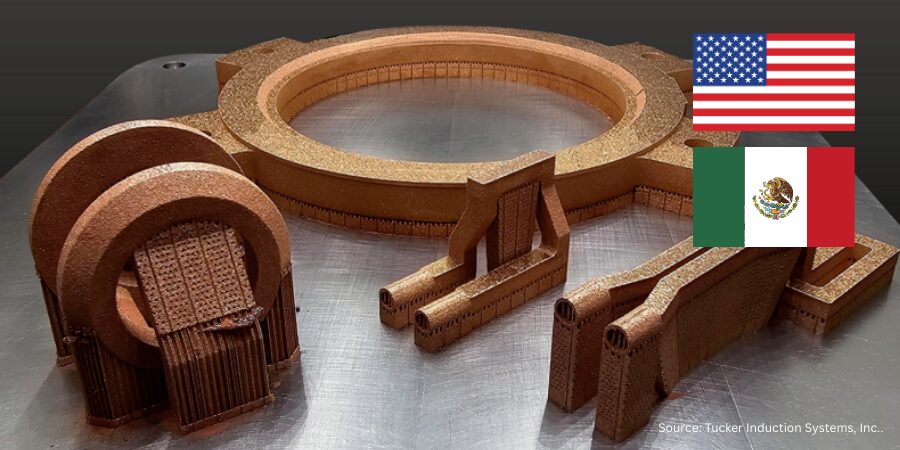
Figure 3. 3D printed sample structures

For example, coils that are larger than the machine is capable of printing — our print bed size is roughly 12 x 12 x 13 inches — can be a limiting factor. Other times, the coil may be manufactured faster using traditional methods. The printer does have limitations, and it is not the best option for certain coils. For example, coils that are less intricate and made from tubing is one type that would be a better candidate for traditional manufacturing; these coils simply require wrapping copper tubing around a mandrel. 

The Future of 3D Printed Coils 

We are continuing to research and fine tune the processes of 3D printing our coils and strive to provide our clients with the best possible product. In order to do that, we must stay vigilant and be willing to continuously learn and improve our designs and processes.  

As we learn more and perfect our 3D printing coil processes, I believe 3D printed coils will play a vital role in the future of the industry. We have proven that 3D printing coils is not just possible, but that in some cases 3D printed coils can outperform their traditionally manufactured counterparts. 

About The Author:

Josh Tucker
Manager of Induction Heating
Tucker Induction Systems, Inc.

Josh Tucker graduated with a bachelor’s degree from Grand Valley State University and was then hired as the head of Purchasing at Tucker Induction Systems. Since starting eight years ago, Josh’s role and capabilities have expanded to machining, wire EDM, 3D printing, and laser engraving. He also organizes the day-today operations and flow of the shop floor. Josh was recognized in Heat Treat Today’s 40 Under 40 Class of 2024.


For more information: Contact Josh Tucker at JTucker@tuckerinductionsystems.com


How 3D Printing Coils Exceeded R&D Expectations Read More »
Cómo las bobinasde impresión 3Dsuperaron lasexpectativas de I+D

Por Josh Tucker, Gerente de Calentamiento por Inducción, Tucker Induction Systems, Inc.
Traducido por Víctor Zacarías, Global _ Thermal Solutions México

This informative piece was first released in Heat Treat Today’s April 2025 Induction Heating & Melting print edition.

To read the article in English, click here.


Las investigaciones sobre bobinas de inducción con impresión 3D han demostrado que estas bobinas son más resistentes y tienen una vida útil más larga en comparación con las bobinas fabricadas tradicionalmente. Lea sobre cómo la fabricación aditiva elimina pasos como el brazing de las uniones y ofrece nuevas posibilidades de diseño. 

Tucker Induction Systems comenzó a explorar la posibilidad de utilizar la tecnología de impresión 3D para fabricar bobinas y descubrió que, en muchos casos, las bobinas impresas en 3D eran más resistentes y duraderas que sus contrapartes fabricadas Tradicionalmente. 

Cuando llegó el COVID-19, el condado de Macomb, Michigan, puso en marcha una iniciativa llamada Proyecto DIAMOnD (Distributed, Independent, Agile Manufacturing on Demand). Proporcionó a los fabricantes PyMEs impresoras 3D de tipo modelado por deposición fundida marca Markforged como una forma de fabricar rápidamente el equipo de protección personal tan necesario para la pandemia y para ayudar a los fabricantes de tamaño pequeño a mediano a superar los problemas de la cadena de suministro que plagaron la industria durante la crisis. 

Estábamos ansiosos por adquirir experiencia práctica en fabricación aditiva a través de la iniciativa DIAMOnD y, al hacerlo, descubrimos que despertó nuestra curiosidad sobre la posibilidad de imprimir en 3D nuestras bobinas y nuevas formas de diseñarlas que van más allá de las capacidades del mecanizado tradicional. 

En 2021, iniciamos un proceso de investigación y desarrollo de dos años de duración para la impresión de bobinas y descubrimos que, al imprimir en 3D bobinas de inducción, podíamos aumentar drásticamente la resistencia de las bobinas y, potencialmente, alargar su vida útil. La experiencia ha abierto nuevos caminos en el diseño de nuestras bobinas, además de brindarnos la capacidad de diseñar bobinas utilizando métodos que van más allá de las capacidades del mecanizado tradicional. 

Figura 1. Bobinas de temple por inducción impresos en 3D.

Es de conocimiento común en la industria que las partes más débiles de una bobina son las uniones soldadas, pero a través del proceso de I+D, hemos aprendido que al imprimir las bobinas en 3D, es posible eliminar la mayoría, o incluso todas las uniones soldadas en la bobina. Esto aumenta la resistencia y, potencialmente, la vida útil de una bobina. Después de años de pruebas y evolución, los resultados finales fueron mejores de lo que esperábamos, lo que demuestra que las bobinas se pueden imprimir y durarán en el campo. 

Sin embargo, hubo algunos desafíos a la hora de adaptarse al uso de la tecnología de impresión 3D. Por ejemplo, el tipo de impresión en cobre que necesitábamos no se estaba realizando en los Estados Unidos, lo que fue un obstáculo para intentar formar un proceso que diera como resultado una bobina impresa con éxito. Luego, uno de los mayores desafíos después de que cerramos el proceso y el material, fue el diseño de los conductos de refrigeración internos para las bobinas. Los conductos debían diseñarse de manera que fueran autosufi cientes y sin restricciones. Teníamos que producir el mismo caudal que las bobinas fabricadas tradicionalmente y asegurarnos de que estábamos dirigiendo la refrigeración hacia las áreas correctas. Descubrir eso requirió muchos intentos fallidos (oportunidades de aprendizaje) antes de lograr el éxito. 

Una vez logrado ese objetivo, instalamos una impresora 3D de metal en Tucker Induction en enero de 2024 y hemos estado imprimiendo con éxito todo tipo de bobinas. Algunos ejemplos incluyen bobinas de diámetro interno, estáticas y de escaneo. 

Los beneficios de utilizar bobinas impresas en 3D 

Si bien las bobinas tradicionales (como nuestra bobina intercambiable de cambio rápido para sistemas de inducción de dos vueltas y diseños de bobina estática con sujeción precisa a presión) han cambiado la industria, la capacidad adicional de la impresión 3D nos permite imprimir piezas dimensionalmente exactas y duraderas que son capaces de funcionar en el campo y que pueden ir más allá de las barreras del mecanizado tradicional. 

Figura 2. Bobina de inducción estática impresa en 3D con retenes

El ahorro de tiempo es una de las mayores ventajas. Debido a que la impresora 3D puede seguir funcionando “fuera de turno”, el tiempo de procesamiento desde la impresora hasta el cliente es mucho más corto en comparación con las bobinas fabricadas tradicionalmente. Nos referimos al tiempo de procesamiento como el tiempo adicional necesario para completar el ensamblaje de la bobina después de la impresión. En algunas situaciones, es posible imprimir un ensamble de bobina completo con la bobina lista inmediatamente para ser enviada al cliente. En otras ocasiones, puede ser necesario soldar con brazing adicional o realizar detalles complementarios para completar el ensamblaje. 

Dado que todas las bobinas son diferentes, el tiempo de procesamiento varía de una bobina a otra. Sin embargo, al imprimir la mayor parte posible del conjunto, podemos limitar la cantidad de trabajo adicional necesario para completar el ensamble. 

La resistencia y la longevidad potencial de las bobinas impresas en 3D son ventajas adicionales. Las partes más débiles de la bobina son las uniones soldadas, pero el proceso que utilizamos para imprimir las bobinas reduce drásticamente la cantidad de uniones soldadas, lo que hace que la bobina sea una construcción sólida. Esto da como resultado un producto que será más resistente en el entorno de inducción y tiene el potencial de durar más que su contraparte fabricada tradicionalmente. 

En lo que respecta a la vida útil de las bobinas impresas en 3D, nuestra base es que las bobinas impresas deben durar al menos tanto como las bobinas fabricadas tradicionalmente. Sin embargo, en nuestra investigación hemos visto que, en promedio, nuestras bobinas impresas en 3D pueden durar entre dos y tres veces más que las bobinas fabricadas tradicionalmente. Si bien la longevidad de cada bobina depende de cada caso, ya que hay muchos factores que influyen en la vida útil de una bobina, una de nuestras bobinas de prueba originales todavía está funcionando en el campo con más de un millón de ciclos de calentamiento. 

Mientras seguimos mejorando los procesos y los diseños, también nos esforzamos por reducir el tiempo de reparación. Reparar y devolver las bobinas de nuestros clientes en un esfuerzo por limitar su tiempo de inactividad siempre ha sido algo por lo que nos esforzamos con nuestras bobinas tradicionales, pero hemos descubierto que las bobinas impresas en 3D son más fáciles de reparar. Dado que las múltiples uniones soldadas no son un problema en las bobinas impresas, se reducen las posibilidades de causar problemas adicionales mientras se trabaja en la reparación original. Si la reparación consiste en reemplazar el cabezal de la bobina, podemos recuperar la impresión original y ejecutarla nuevamente, en lugar de tener que volver a maquinar ensamblar y soldar toda la bobina, lo que reduce significativamente el tiempo de reparación de muchas bobinas impresas en 3D. 

Limitaciones de las bobinas de impresión 3D 

A pesar de las ventajas de la impresión 3D de bobinas de inducción y del hecho de que la capacidad de imprimir bobinas te lleva a pensar que cada bobina debe imprimirse, hay algunos casos en los que todavía es más efectivo utilizar la fabricación tradicional. 

Figura 3. Estructuras de muestra impresas en 3D.

Por ejemplo, las bobinas que son más grandes de lo que la máquina puede imprimir (el tamaño de nuestra plataforma de impresión es de aproximadamente 12 x 12 x 13 pulgadas) pueden ser un factor limitante. En otras ocasiones, la bobina se puede fabricar más rápido utilizando métodos tradicionales. La impresora tiene limitaciones y no es la mejor opción para ciertas bobinas. Por ejemplo, las bobinas que son menos intrincadas y están hechas de tubos son un tipo que sería un mejor candidato para la fabricación tradicional; estas bobinas simplemente requieren envolver un tubo de cobre alrededor de un mandril. 

El futuro de las bobinas impresas en 3D 

Seguimos investigando y perfeccionando los procesos de impresión 3D de nuestras bobinas y nos esforzamos por ofrecer a nuestros clientes el mejor producto posible. Para ello, debemos permanecer atentos y estar dispuestos a aprender y mejorar continuamente nuestros diseños y procesos. 

A medida que aprendemos más y perfeccionamos nuestros procesos de impresión 3D de bobinas, creo que las bobinas impresas en 3D desempeñarán un papel fundamental en el futuro de la industria. Hemos demostrado que la impresión 3D de bobinas no solo es posible, sino que en algunos casos las bobinas impresas en 3D pueden superar a sus contrapartes fabricadas tradicionalmente. 

Sobre El Autor:

Josh Tucker
Gerente de Calentamiento por Inducción
Tucker Induction Systems, Inc.

Josh Tucker se graduó de licenciatura dela Grand Valley State University y luego fue contratado como jefe de compras en Tucker Induction Systems. Desde que comenzó hace ocho años, el rol y las capacidades de Josh se han expandido al maquinado, la electroerosión, la impresión 3D y el grabado láser. También organiza las operaciones diarias y el fl ujo del taller. Josh fue reconocido en la clase 2024 de 40 Under 40 de Heat Treat Today.


Para más información: Contacta a Josh Tucker en JTucker@tuckerinductionsystems.com. 


Cómo las bobinasde impresión 3Dsuperaron lasexpectativas de I+D Read More »

Boronizing — What Is It and Why Is It Used?

The Heat Treat Doctor® has returned to offer sage advice to Heat Treat Today readers and to answer your questions about heat treating, brazing, sintering, and other types of thermal treatments as well as questions on metallurgy, equipment, and process-related issues.

This informative piece was first released in Heat Treat Today’s April 2025 Induction Heating & Melting print edition.


Of all the case hardening processes, boronizing (a.k.a. boriding) is perhaps the least understood and least appreciated. Let’s learn more.  

In this era of using coating technologies (e.g., PVD, CVD, DLC) to produce hard, wear-resistant surface layers on component parts, one often forgets that there is a thermo-chemical treatment that often can outperform many of them.  

Boronizing (a.k.a. Boriding)  

Table 1. Examples of hardness levels achieved by boronizing*
*The hardness of the boride layer depends on the compound formed. For example, FeB is 1900–2100 HV, Fe2B is 1800–2000 HV, while Ti2B is 3000 HV.

Boronizing is a case hardening process that produces a very high surface hardness in steels and is used for severe wear applications (see Table 1). The layer of borides (FeB and Fe2B) formed also significantly increases corrosion resistance of the steel.

Boron is added to steels for its unique ability to increase hardenability and lower the coefficient of (sliding) friction. In addition, boron is used to control phase transformation and microstructure since the time-temperature-transformation curve for the material when boron is diffused into the surface is shifted to the right. 

The Process

The boronizing process is typically run in a solid (pack), liquid, or gaseous medium. Each of these methods involves the diffusion of boron into the steel’s surface, but they differ in how boron is introduced and the conditions under which they operate. 

  • In the pack boronizing, a powder mixture of boron compounds (typically boron carbide or sodium tetrafluoroborate) is packed around the steel workpieces. This pack is placed in a retort-style furnace where it is heated, typically with an argon cover gas, to temperatures ranging from 1300°F to 1832°F (700°C to 1000°C). The heat causes the boron to diffuse into the steel surface, forming a boride layer (Figure 1). 
    • A key advantage of this method of boronizing is that it is highly effective for producing uniform boride coatings. It is particularly suitable for large parts or components that may not be suitable for immersion in a liquid or exposure to gaseous boron compounds. 
  • In liquid boronizing, the steel is immersed in a molten bath containing boron-bearing compounds, typically a mixture of sodium tetraborate and other chemicals. The steel absorbs boron from the bath, forming a boride layer. The liquid process tends to be faster than the solid method and can be more economical for certain applications. 
    • One of the challenges with liquid boronizing is that the process can be difficult to control in terms of coating thickness and uniformity. Therefore, this method is often used for smaller, simpler parts rather than large or complex geometries. 
  • Gaseous boronizing involves exposing the steel to a boron-containing gas, typically diborane (B2H6) or boron trifluoride (BF3), at elevated temperatures. The boron diffuses from the gas onto the surface of the steel, forming the boride layer. Gaseous boronizing allows for better control over the process compared to the other two methods, but it requires specialized equipment to handle the toxic and reactive nature of the boron gases. 
    • The advantage of gaseous boronizing lies in its ability to produce a uniform and controlled boride layer, especially for complex parts or those with intricate geometries. 

When working with any boron-containing compounds, adequate ventilation and other safety precautions (e.g., masks, gloves) are required. If boron tetrafloride is present, extra precautions are necessary since it is a poisonous gas.  

Typical processing temperature is in the range of 1300°F–1832°F (700°C–1000°C) with time at temperature from 1 to 12 hours. Typical case depths achieved range from 0.003″–0.015″ (0.076 mm to 0.38 mm) or deeper (Figure 2). Case depths between 0.024″ and 0.030″ require longer cycles up to 48 hours in duration. 

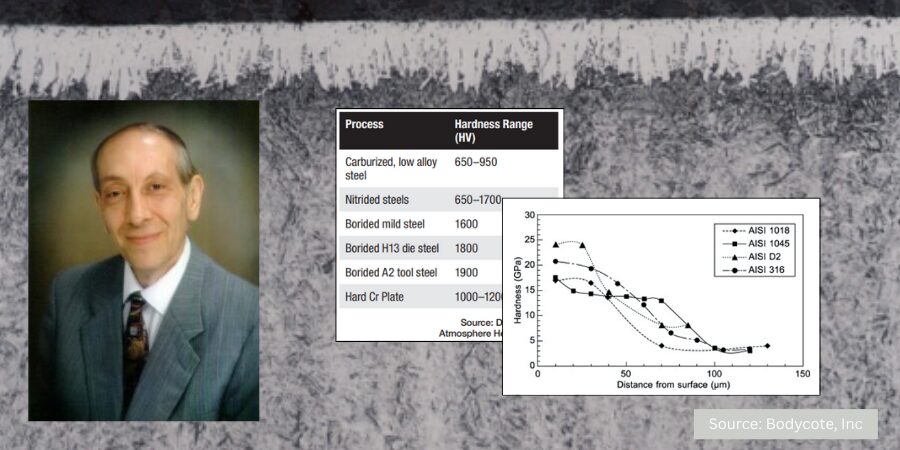
Figure 1. Typical microstructure of a boronized component

The mechanical properties of the borided alloys depend strongly on the composition and structure of the boride layers. The most desirable microstructure a er boronizing is a single-phase boride layer consisting of Fe2B2. Plain carbon and low alloy steels are good candidates for boronizing, while more highly alloyed steels may produce a dualphase layer (i.e., boron-rich FeB compounds) because the alloying elements interfere with boron diffusion. The boron-rich diffusion zone can be up to seven times deeper than the boride layer thickness into the substrate. 

The hardness of the borided layer depends on the composition of the base steel (Table 1). Comparative data on steels that have been borided versus carburized or carbonitrided, nitrided or nitrocarburized are available in the literature (see Campos-Silva and Rodriguez-Castro, “Boriding,” 651–702). The surface hardness achieved through boronizing is among the highest for case hardening processes. The boride layers typically exhibit hardness values in the range of 1000 to 1800 HV. This level of hardness helps prevent surface deformation under load, which is particularly beneficial in applications involving high contact pressures, such as gears, bearings, and automotive components. 

Contact us with your Reader Feedback!

Boronizing can also lower the coefficient of friction on the surface of the steel. This is particularly useful in applications where reduced friction is necessary, such as in sliding or rotating parts that operate under high pressures. The reduced friction helps to minimize wear and energy consumption, improving the overall efficiency and longevity of the components. 

Unlike other surface-hardening methods that can compromise the core properties of the material, boronizing tends to retain the toughness and ductility of the base steel. This means the steel remains strong and resistant to cracking or breaking while also benefiting from a hard, wear-resistant surface. 

By contrast, when boron is used as an alloying element in plain carbon and low alloy steels, it is added to increase the core hardenability and not the case hardenability. In fact, boron can actually decrease the case hardenability in carburized steels. Boron “works” by suppressing the nucleation (but not the growth) of proeutectoid ferrite on austenitic grain boundaries. Boron’s effectiveness increases linearly up to around 0.002% then levels off.  

Figure 2. Hardness-depth profiles on different borided steel*
* Notes:
1. The boriding temperature was 1740°F (950°C) with six (6) hours of exposure
2. Hardness conversion: 1 GPa = 102 HV (Vickers hardness)
3. Depth conversion: 10 micrometers = 0.00039 inches

Boronizing Applications 

Given the range of benefits that boronizing offers, it has found widespread use across many industries. Some of the most common applications include: 

  • Automotive industry: Gears, camshafts, and valve components are often boronized to enhance wear resistance and extend their service life. 
  • Aerospace: Parts exposed to high temperatures and wear, such as turbine blades, landing gears, and other critical engine components, benefit from the hard, wear-resistant coatings created by boronizing. 
  • Cutting tools and dies: The high surface hardness and resistance to abrasion make boronized tools highly effective for machining and forming hard materials. 
  • Mining and earthmoving equipment: Equipment like drill bits, shovels, and conveyor parts subjected to abrasive conditions can be boronized to improve their performance and reduce downtime. 
  • Oil and gas: Valves, pumps, and other equipment exposed to corrosive fluids in the oil and gas industry benefit from the enhanced corrosion resistance of boronizing. 

In Summary

Boronizing is not for everyone, but it is safe to say that it is the “forgotten” case hardening process, one that will find increasing use in the future as demand for better tribological properties increases. It is a highly effective surface treatment process that imparts significant benefits to steel, including enhanced wear and corrosion resistance, increased surface hardness, and improved frictional properties. By carefully selecting the boronizing method and optimizing process parameters, manufacturers can produce components with superior performance in demanding applications. As industries continue to push the boundaries of material performance, boronizing can be an essential technique for producing long-lasting, high-performance steel components.  

References

Campos-Silva. I. E., and G. A. Rodriguez-Castro, “Boriding to Improve the mechanical properties and corrosion resistance of steels.” In Thermochemical Surface Engineering of Steels, edited E. J. Mittemeijer and M. A. J. Somers. Woodhead Publishing, 2014. 

Herring, Daniel H. Atmosphere Heat Treatment, vol. I. BNP Media, 2014.  

Kulka, Michal. “Current Trends in Boriding: Techniques.” Springer Nature, 2019. 

Senatorski, Jan, Jan Tacikowski, and Paweł Mączyński. “Tribological Properties and Metallurgical Characteristics of Different Diffusion Layers Formed on Steel.” Inżynieria Powierzchni 24, no. 4 (2019).  

About the Author

Dan Herring
“The Heat Treat Doctor”
The HERRING GROUP, Inc.

Dan Herring has been in the industry for over 50 years and has gained vast experience in fields that include materials science, engineering, metallurgy, new product research, and many other areas. He is the author of six books and over 700 technical articles.

For more information: Contact Dan at dherring@heat-treat-doctor.com.

For more information about Dan’s books: see his page at the Heat Treat Store.


Boronizing — What Is It and Why Is It Used? Read More »

Skip to content